
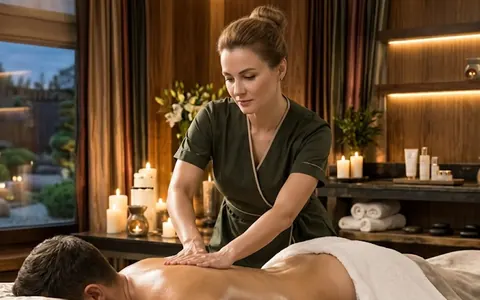
Quick answer: Russian massage at Lathika Spa is a firm, sports-oriented style based on the Russian classical method: stroking, kneading, friction, percussion and vibration on the back, legs and shoulders. It is our deepest-pressure style and suits physical workers and people who train. It costs AED 99 for 60 minutes or AED 150 for 90 minutes, 24 hours a day.
Key Takeaways
- Russian massage is our firmest style, from the Russian classical school.
- It uses five techniques: stroking, kneading, friction, percussion and vibration.
- Mild tenderness for a day afterwards is normal; sharp pain is not.
- AED 99 for 60 minutes or AED 150 for 90 minutes, 24 hours a day.
- DED Licence 114732
- 4.9 from 944 Google reviews
- Open 24 Hours · 365 Days
- Therapists with 5+ years' experience
What Is Russian Massage?
Russian massage is a firm, structured method from the Russian classical school, using stroking, kneading, friction, percussion and vibration to work large muscle groups. It is energetic rather than drowsy, and its main purpose is to help hard-working muscles recover.
At Lathika Spa, it is our firmest style. It is popular with construction and logistics workers, drivers who also lift and load, and men who train at the gym or play sport. If your muscles feel heavy, dense and overworked, this is the style designed for them.
Origins: The Russian Classical School
Russian massage grew out of the classical European bodywork tradition and developed its own identity in the twentieth century, when it was studied and taught systematically in the Soviet Union. It was used widely in sports medicine, physical education and rehabilitation settings, and teams of masseurs worked with athletes before and after competition.
That history explains its character today. It is methodical: the therapist warms the tissue first, then works progressively deeper, then calms the area down again. It is practical: the focus is on how the muscles function, not only on how relaxing the session feels. And it is vigorous: rhythm and friction are used to create warmth and to keep the work moving.
Many of the techniques now called "sports massage" around the world share the same roots.
The Five Core Techniques
The method is built on five groups of movement. A session moves between them in a deliberate order.
1. Stroking
Long, smooth strokes over the skin and muscles. Stroking opens and closes the session and links one technique to the next. It warms the area and prepares the muscles for deeper work.
2. Kneading
The central technique of the method. The therapist grips, lifts and squeezes the muscle, rolling it under the hands. Kneading on the back, shoulders, thighs and calves is where most of the deep work happens.
3. Friction
Firm, brisk rubbing with the palms, knuckles or fingertips. Friction creates warmth and works through tight areas where the muscle feels dense.
4. Percussion
Light, rhythmic tapping or cupping with the edges of the hands. Percussion feels invigorating and is used on large muscle groups such as the back and thighs.
5. Vibration
Fine shaking or trembling movements transmitted through the hands. Vibration is often used near the end of work on an area to help it relax.
What Happens During the Session
- Consultation. Tell your therapist which muscles feel sore or heavy, what kind of work or training you do, and how firm you want the pressure. They will ask about injuries and health conditions.
- Settling in. The therapist steps out while you get comfortable. Towels keep you covered throughout the session.
- Warm-up. Long stroking movements with oil warm the back, legs and shoulders.
- Deep work. Kneading and friction work progressively deeper into the large muscles, with the pressure adjusted to your feedback.
- Rhythm and release. Percussion and vibration add energy and help each area let go.
- Calming finish. Lighter strokes slow everything down before a few minutes' rest.
How It Feels
Expect a vigorous, firm session. Kneading on tight muscles feels intense, friction feels warm and percussion feels lively. It is not a style for drifting off to sleep, though many guests feel deeply relaxed at the end.
The pressure should always stay on the right side of "strong but good". If you find yourself holding your breath or tensing up, ask for less. Afterwards, the large muscles often feel lighter and looser, and some guests feel slight tenderness the next day, similar to the day after a workout.
Who It May Suit
- Men who do physical work: lifting, carrying, loading, standing all day
- Gym-goers and people who play football, cricket or other sports
- Drivers whose legs and back feel heavy after long shifts
- Anyone who prefers firm, deep pressure over a gentle session
- Guests who want recovery, not only relaxation
If you are new to bodywork, sensitive to pressure or mainly want to rest, mention it when you book. Your therapist can keep the pressure lighter, and the team can suggest another approach for future visits.
When It Is Not the Right Choice
Firm pressure is not suitable for everyone. Avoid it, or speak to a doctor first, if you have:
- A recent muscle tear, sprain, fracture or other acute injury
- Bruising, swelling or inflammation in the area
- A blood clot or a history of deep vein thrombosis
- Osteoporosis or a condition that makes bones fragile
- A heart condition or uncontrolled high blood pressure
- A fever, infection or skin condition
- Any condition for which a doctor has advised against massage
Tell your therapist about health conditions before the session, even if you are not sure they are relevant.
Session Details and Price
| Detail | At Lathika Spa |
|---|---|
| 60-minute session | AED 99 |
| 90-minute session | AED 150 |
| Pressure | Firm, adjusted to you |
| Focus | Back, legs and shoulders |
| Main techniques | Stroking, kneading, friction, percussion, vibration |
| Hours | 24 hours a day, 7 days a week |
| Payment | Visa, Mastercard or cash |
60 or 90 minutes?
Sixty minutes gives thorough attention to the back, shoulders and legs. Ninety minutes allows a longer warm-up and more time on each muscle group, which many guests prefer after a particularly heavy week of work or training.
Meet Our Russian Specialists
Our specialists for this style have each practised for at least five years, and all have been trained by our Wellness Director, Anjali Menon, on how we work: listen first, then adjust the pressure to the guest.
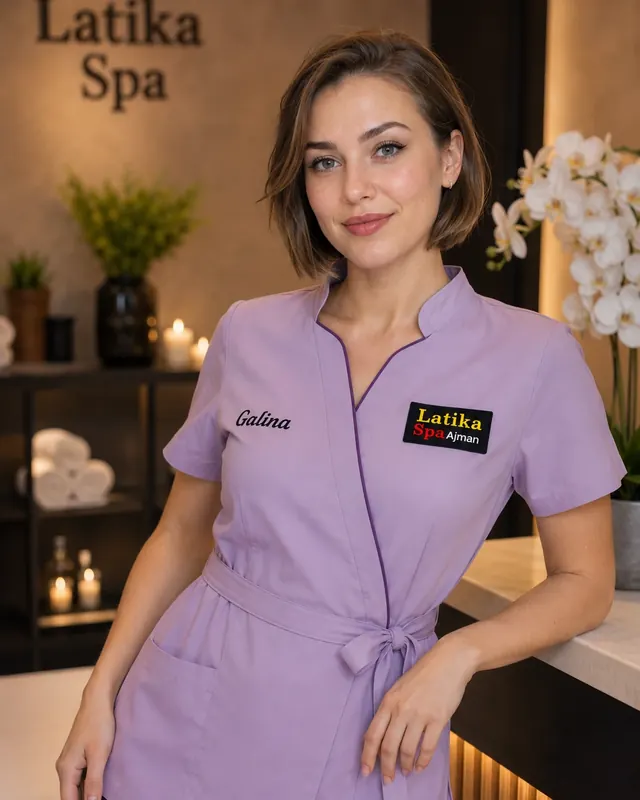 Galina
Specialist- Experience
- 10 years
- Languages
- English
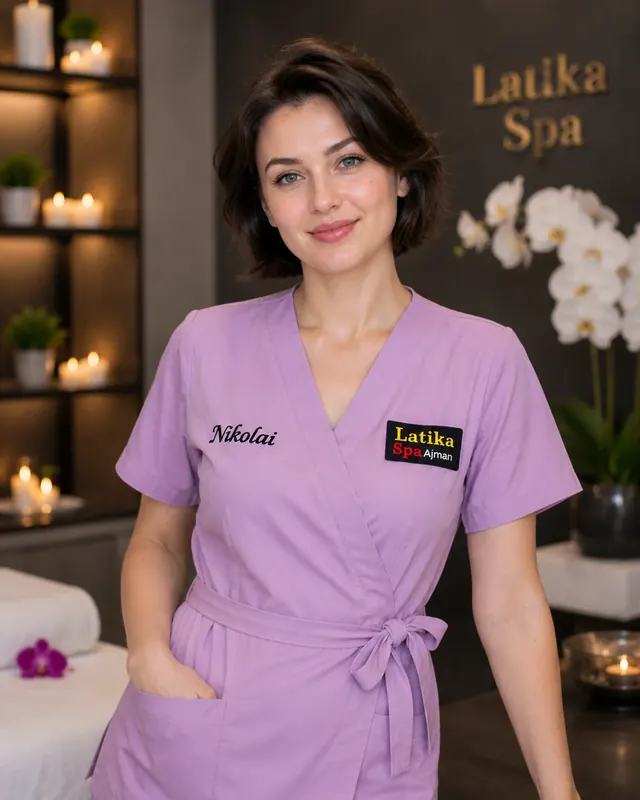 Nikolai
Specialist- Experience
- 6 years
- Languages
- English, Arabic
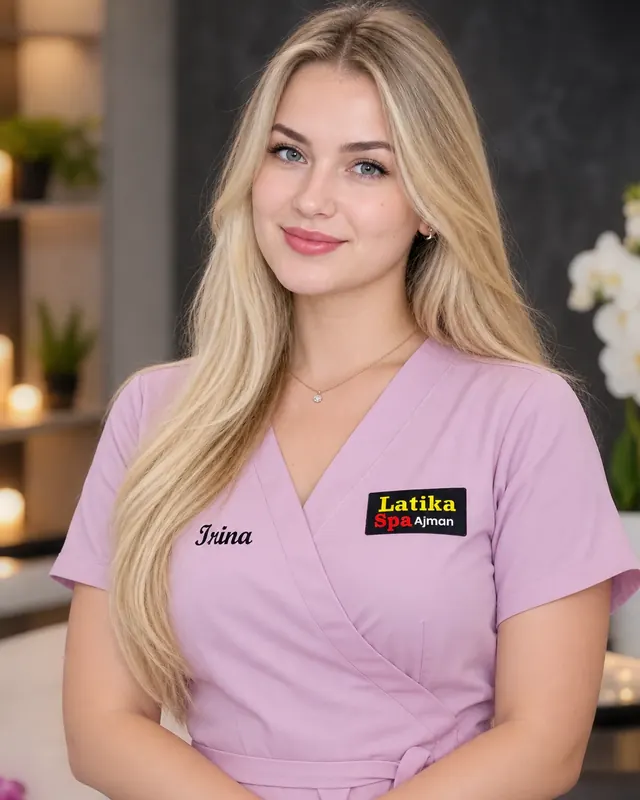 Irina
Irina
Also Moroccan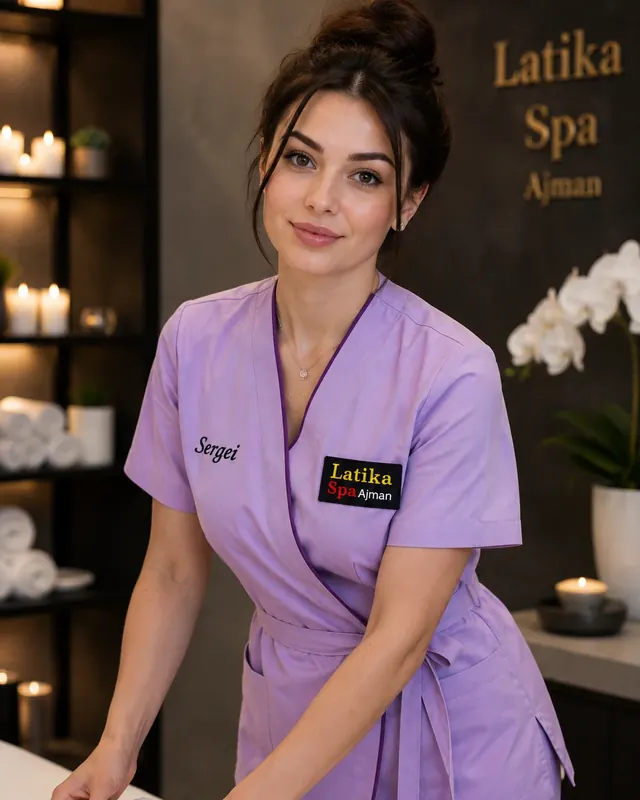 Sergei
SpecialistGalina has ten years of experience and particular interest in chronic stiffness. Nikolai has six years of experience in sports recovery and speaks English and Arabic. Mention a therapist's name when you book and we will arrange your visit around their shift.
How to Prepare
- Plan around training. A rest day or the evening after a session is ideal.
- Drink water during the day.
- Tell your therapist what you trained or lifted in the last few days.
- Avoid a large meal just before the session; you will be lying face down for part of it.
Aftercare
- Get up slowly and take a moment before standing.
- Drink water over the next few hours.
- Skip heavy training for the rest of the day; light walking is fine.
- Expect mild tenderness in worked muscles for a day. A warm shower can feel good.
- Contact a doctor if pain is sharp, severe or does not settle within a couple of days.
Fitting It Into a Recovery Routine
Guests who train regularly often book this style every two to four weeks, or after a particularly demanding period at work. There is no fixed rule. Notice how long your muscles feel lighter after each session and plan around that. Because the price is the same every visit, you can choose a 90-minute session after a heavy week and a 60-minute session the rest of the time.
For Physical Workers
A large share of the guests who choose it work with their bodies: construction, warehouses, logistics, maintenance and delivery. Their muscles do the same heavy movements hundreds of times a day, often in heat. By the end of the week, the back, thighs and shoulders feel dense and heavy.
This style suits this kind of fatigue because it works systematically through the large muscle groups with firm kneading and friction, rather than spending the session on light relaxation strokes. Many physical workers come on their day off, so they can rest properly afterwards. Because we are open 24 hours, coming straight after a night shift is also possible.
A Pressure Guide
It is firm, but "firm" means different things to different people. Use this scale to tell your therapist what you want.
| Level | How it feels | Typical choice |
|---|---|---|
| 4 to 5 | Strong but comfortable everywhere | First Russian session, or a tender week |
| 6 to 7 | Intense on tight muscles, easy to breathe through | Most regular guests |
| 8 | Very strong; needs slow breathing on tight spots | Experienced guests with dense muscles |
| 9 to 10 | Painful | Not recommended; ask for less |
Pressure should never make you hold your breath or tense against it. If that happens, say "lighter" and your therapist will adjust immediately.
Common Myths
"Russian massage is meant to hurt." It is meant to be firm. Pain causes muscles to tighten, which works against the treatment.
"More pressure gives faster results." Beyond a certain point, extra pressure only adds discomfort. A good therapist finds the firmest pressure your muscles will accept and stays there.
"It is only for athletes." Its history is in sports medicine, but most of our guests for this style are working men whose jobs are as physical as any sport.
What Your Therapist Is Feeling For
During the session, your therapist is constantly reading the muscle under their hands. They notice areas that feel dense or ropy, places where the muscle resists or twitches, and differences between the left and right sides of the body. They use that information to decide where to spend time and how firm to go.
That is why your feedback matters so much. If a spot feels tender, sharp or "good-sore", say so. Combined with what your therapist can feel, your words help them find the right pressure for each area rather than applying the same force everywhere.
It is also why this style gets better over several visits with the same therapist. Once they know how your body usually feels, they can tell quickly what has changed since last time and adjust the session accordingly.
A Note on Health
Massage may help ease everyday muscle tension and support recovery. It is not a medical treatment and does not diagnose or cure any condition. If you have an injury or health condition, speak to your doctor first and tell your therapist before the session. Read our medical disclaimer.
Why Guests Choose Lathika Spa for Russian Massage
Five quick checks before you book.
Verify Us First
Ajman DED Licence No. 114732, rated 4.9 from 944 Google reviews.
See our Google profileKnow Who Treats You
Galina, Nikolai, Irina and Sergei lead this style.
Meet the therapistsOne Written Price
One price for every style. Nothing added at the end.
Reserve your timeEasy to Reach
Al Rawda 3, Ajman. Free parking nearby.
Get directionsFacts at a Glance
- Style
- Russian Massage
- Pressure
- Firm
- Focus
- Back, legs, shoulders
- Best for
- Recovery after physical work or training
- Price
- AED 99 / 60 min · AED 150 / 90 min
- Hours
- Open 24 hours, 7 days
What Guests Ask Before Booking
Is Russian massage painful?
It is firm, not painful. The pressure should feel strong but manageable. Tell your therapist straight away if anything feels sharp and they will ease off.
Is Russian massage a good idea before a workout?
Most people prefer it after training or on a rest day, because firm work can leave muscles tender for a day. If you train the same day, keep it light and leave a few hours in between.
Is Russian massage the same as sports massage?
They are closely related. Russian classical massage was developed partly within Soviet sports medicine and shares many techniques with what is now called sports massage.
Which therapists give Russian massage at Lathika Spa?
Our Russian team includes Galina, with ten years of experience, and Nikolai, with six years. You can ask for either by name when you book.
How long does tenderness last after a Russian massage?
Mild tenderness in worked muscles usually settles within a day, much like after a workout. If pain is sharp, severe or lasts more than a couple of days, see a doctor.