
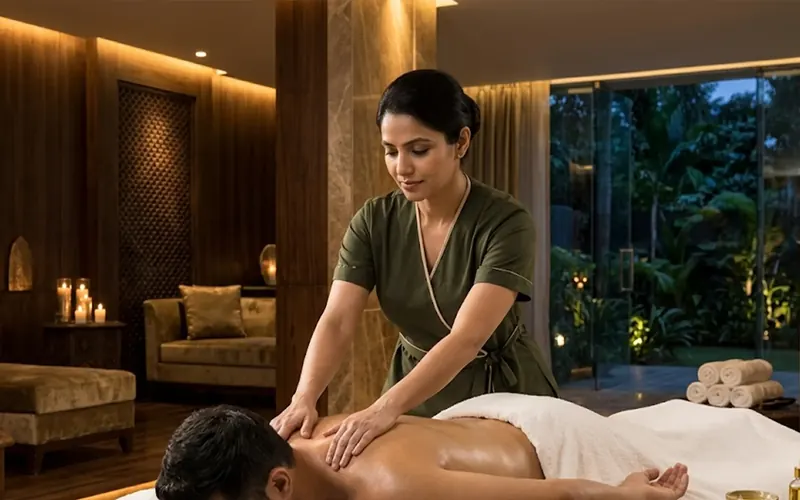
Quick answer: Indian massage at Lathika Spa is a light-to-medium, rhythmic full-body style with oil, drawn from India's long household tradition of maalish. It is designed for relaxation rather than deep work. It costs AED 99 for 60 minutes or AED 150 for 90 minutes and is available 24 hours a day from therapists who specialise in the style.
Key Takeaways
- Indian massage is a light-to-medium, rhythmic full-body oil style.
- It comes from India's household massage tradition (maalish); "shampoo" comes from the Hindi chāmpo.
- It is the gentlest style on our menu.
- AED 99 for 60 minutes or AED 150 for 90 minutes, available 24 hours.
- DED Licence 114732
- 4.9 from 944 Google reviews
- Open 24 Hours · 365 Days
- Therapists with 5+ years' experience
What Is Indian Massage?
Indian massage is a full-body treatment that uses oil and light, rhythmic strokes to help the body and mind relax. It is gentle, steady and predictable, which is exactly why so many people find it easy to switch off during it.
Where some styles set out to work deep into specific muscles, this one takes a broader view. The aim is not to "fix" one sore spot but to bring the whole body down from a busy, tense state to a calm one. The pressure stays light to medium throughout, the rhythm stays even, and the therapist moves from one area to the next without sudden changes.
At Lathika Spa, Indian massage is the gentlest of our traditions. It suits guests who want to rest, who are new to bodywork or who simply prefer a softer touch.
A Tradition That Starts at Home
In India, this kind of bodywork has never been only a spa treatment. For generations it has been part of daily family life. In many Indian homes, babies are massaged with oil every day, often by a mother or grandmother who learned the same strokes as a child. Adults rub each other's shoulders after work, and older relatives are given oil rubs to ease stiff joints. The Hindi and Urdu word for this kind of rubbing is maalish.
The tradition also gave the English language a word. "Shampoo" comes from the Hindi chāmpo, from a verb meaning to press or knead. It originally described kneading the body, not washing the hair. In the early nineteenth century, Sake Dean Mahomed, a traveller from Bengal, opened a "shampooing" bath in Brighton, England, offering Indian-style bodywork to the British public. Over time, the word drifted to mean washing hair.
Spas around the world still keep those household roots: warm hands, oil, a steady rhythm and an intention to comfort rather than to challenge.
The Main Techniques
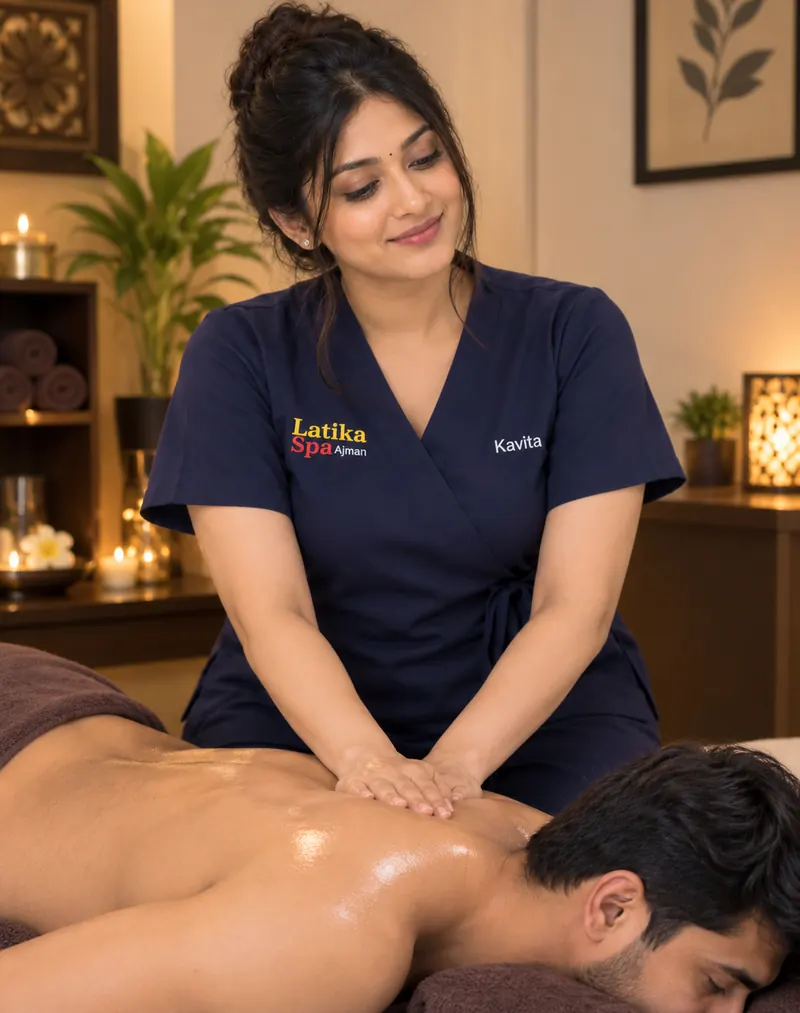
The style relies on a small number of simple techniques, repeated with care. You will not feel anything sharp or sudden.
Long gliding strokes
The therapist spreads oil with long, flowing strokes along the back, arms and legs. These strokes warm the skin and muscles and set the rhythm for the session.
Gentle circular movements
Small circles with the palms or fingertips around the shoulder blades, along the spine and over the calves help ease surface tension without going deep.
Light kneading
Soft, rolling squeezes on the shoulders, upper arms and thighs. Compared with firmer styles, the kneading is gentle and slow.
Rhythmic pressing
Steady, even pressure with the palms, moving in time from one area to the next. The repetition is what many guests find most calming.
Soothing finishing strokes
The session ends with lighter strokes over the whole body, slowing down gradually so you are not jolted back to alertness.
What Happens During the Session
- Consultation. Your therapist asks how you feel today, whether you have any injuries or health conditions, and confirms that you would like light to medium pressure.
- Settling in. The therapist steps out while you get comfortable on the table. Towels keep you covered throughout, with only the area being worked on uncovered.
- Back and shoulders. Oil is applied and the session begins with long, gliding strokes across the back and shoulders to set an even rhythm.
- Arms and legs. The therapist moves through the arms, hands, legs and feet with gentle kneading and rhythmic pressing.
- Full-body flow. The remaining areas are worked at the same calm pace, keeping the rhythm consistent.
- Slow finish. Lighter strokes bring the session to a close. You rest for a few minutes before getting up.
Throughout the session, you can ask for a little more or less pressure, more time on one area, or to skip any part of the body.
How It Feels
Most guests describe it as soothing, warm and steady. Because the strokes repeat and the pressure never jumps, your body quickly stops bracing for what comes next. Breathing slows and many guests drift off to sleep, which is completely normal.
You should not feel pain at any point. If a stroke feels uncomfortable, tell your therapist and they will lighten it immediately. After the session, you are likely to feel relaxed and a little drowsy rather than energised.
Who It May Suit
Indian massage is a good choice if:
- You feel stressed or wound up and want to unwind
- You find it hard to switch off after work or struggle to sleep after a long shift
- You are new to bodywork and would like a gentle introduction
- You prefer a soft, steady touch to deep or vigorous work
- You want an hour of pure rest with no particular "problem" to work on
It is less suited to guests who want firm, deep pressure on dense or very tight muscles. Your therapist can tell you if another approach would suit your body better.
Who Should Check With a Doctor First
This style is gentle, but any hands-on treatment is best avoided or discussed with a doctor first if you have a fever or infection, a contagious skin condition, a recent injury or surgery, a blood clot, a heart condition, uncontrolled blood pressure, or any condition for which a doctor has advised against it. Always tell your therapist about health conditions before the session starts.
Session Details and Price
| Detail | At Lathika Spa |
|---|---|
| 60-minute session | AED 99 |
| 90-minute session | AED 150 |
| Pressure | Light to medium |
| Focus | Full body |
| Oil | Yes |
| Hours | 24 hours a day, 7 days a week |
| Booking | Walk in, call or WhatsApp +971 52 480 6393 |
| Payment | Visa, Mastercard or cash |
Should you choose 60 or 90 minutes?
Sixty minutes covers a complete full-body session at a comfortable pace and is the right choice for most guests, especially first-timers. Ninety minutes slows everything down further. The strokes become longer, there is more time on the back and shoulders, and the transition from one area to the next is even more gradual. If your main goal is deep rest, the extra half hour is worth considering.
Meet Our Indian Specialists
Our Indian specialists are trained in this tradition. Every one has at least five years of hands-on experience, and each has been trained by our Wellness Director, Anjali Menon, on our house standard: listen to the guest before you start working.
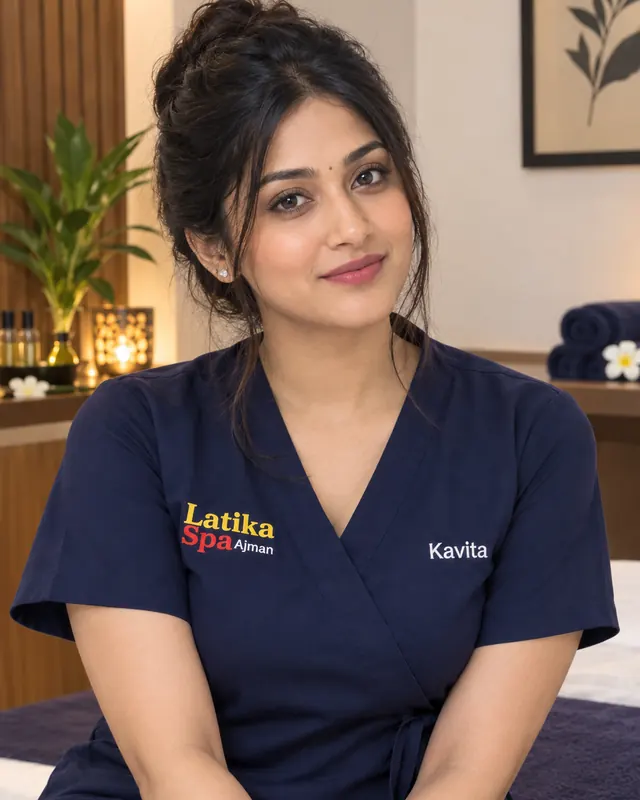 Kavita
Also Moroccan- Experience
- 8 years
- Languages
- English, Hindi
 Kismat
Specialist Naina
Naina
Specialist Shanti
SpecialistKavita, who has eight years of experience, speaks English and Hindi. If you would like a particular therapist, mention their name when you book on WhatsApp and we will arrange your session around their shift.
How to Prepare
- Eat lightly in the hour or two beforehand.
- Arrive a few minutes early so you have time to settle in the reception lounge.
- Tell your therapist about any sensitive areas, such as ticklish feet, an old injury or skin that reacts to oil.
- Leave time afterwards. The session can make you sleepy, so avoid booking it straight before an important task.
Aftercare: Making the Calm Last
- Get up slowly when the session ends.
- Drink a glass of water.
- Keep the next hour quiet if you can. Many guests go straight home to rest.
- Take a few minutes before driving, particularly after a late-night session.
- Notice how you sleep that night. Many guests find they sleep well after this kind of session, which is a good sign the session suited you.
Common Questions About the Tradition
Does Indian massage use a special oil?
Oil is central to the tradition, and families in different parts of India use different oils. At Lathika Spa, your therapist uses an oil suited to the session. If you have a sensitivity or allergy to any oil, tell your therapist before you begin.
Is Indian massage a medical treatment?
No. It is a relaxation treatment. It may help you feel calmer and ease everyday muscle tension, but it does not diagnose, treat or cure any condition.
Why is the pressure kept light?
Because the purpose is relaxation. Lighter, rhythmic pressure tends to help the whole body settle, while very firm pressure keeps you alert. If you want deeper work, your therapist can suggest a different approach on another visit.
For Stress and Sleep
Many guests choose this style not because anything hurts, but because they cannot slow down. Long shifts, family responsibilities and screens late into the night leave the body tense even when it is resting. Light, rhythmic touch gives the nervous system a clear signal that it is safe to switch off.
Guests often tell us they sleep more deeply on the night of a session. It is not a sleep treatment, and if you have ongoing sleep problems a doctor is the right person to see. But as a regular way to unwind, an evening or late-night visit suits many people well.
What to Tell Your Therapist
The consultation is short, but these details help your therapist shape the session around you:
- Your goal. "I just want to relax" is a perfectly good answer.
- Pressure. Light, or light-to-medium.
- Areas to avoid. Ticklish feet, a sensitive neck, an old injury.
- Oil. Any allergy or skin sensitivity.
- Conversation. Whether you would rather talk or stay quiet.
Why Rhythm Matters More Than Strength
Here, the rhythm of the strokes does much of the work. A steady, repeated pattern lets your body predict what comes next, so it stops guarding against the therapist's hands. That is when breathing slows and the shoulders drop. Our therapists keep the tempo even from the first stroke to the last, and they avoid sudden changes in pressure or speed. If you notice yourself drifting off halfway through, the rhythm is doing its job.
A Note on Health
Massage may help relieve everyday muscle tension and support relaxation. It is not medical treatment. If you have an injury or health condition, speak to your doctor first and tell your therapist before the session. Read our medical disclaimer.
Why Guests Choose Lathika Spa for Indian Massage
Five quick checks before you book.
Verify Us First
Ajman DED Licence No. 114732, rated 4.9 from 944 Google reviews.
See our Google profileKnow Who Treats You
Kavita, Kismat, Naina and Shanti lead this style.
Meet the therapistsOne Written Price
One price for every style. Nothing added at the end.
Reserve your timeEasy to Reach
Al Rawda 3, Ajman. Free parking nearby.
Get directionsFacts at a Glance
- Style
- Indian Massage
- Pressure
- Light to medium
- Focus
- Full body
- Best for
- Unwinding after a busy day
- Price
- AED 99 / 60 min · AED 150 / 90 min
- Hours
- Open 24 hours, 7 days
Indian Massage Questions
Is Indian massage the same as Indian head massage?
Not quite. Indian head massage (champi) is a separate tradition focused on the scalp, neck and shoulders. The version we offer at Lathika Spa is a full-body session with light, rhythmic strokes.
Is Indian massage suitable if I have never had a massage?
Yes. It is the gentlest style we offer, with light to medium pressure and a steady rhythm, which makes it an easy first session.
Can I ask for firmer pressure during an Indian massage?
You can ask for a little more pressure and your therapist will adjust. It stays a relaxing style, though, so it will not become deep or vigorous.
How is Indian massage different from deep tissue work?
Deep tissue work uses slow, heavy pressure to reach deeper layers of muscle. This style stays light to medium and rhythmic, because its aim is relaxation rather than working deep into one area.
What is the best time of day for this style?
Many guests choose it in the evening or late at night because it tends to leave them calm and sleepy. Because we are open 24 hours, you can book whenever suits you.