
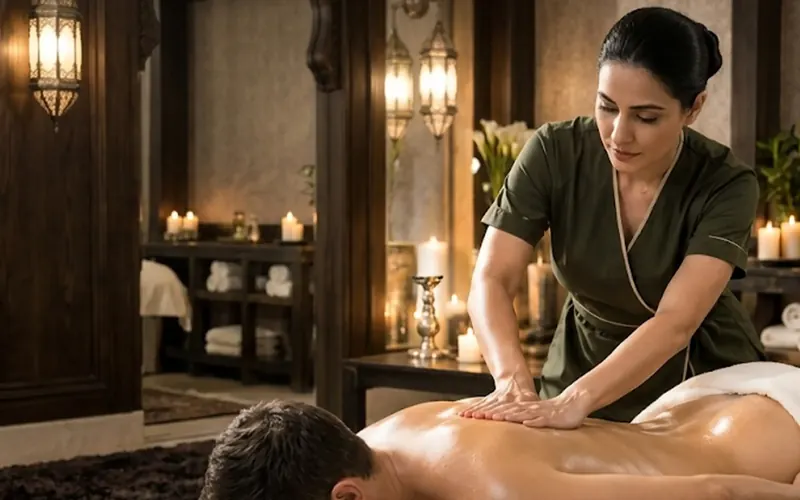
Quick answer: Pakistani massage at Latika Spa is a medium-to-firm style that concentrates on the neck, shoulders and upper back, using traditional South Asian maalish techniques. It suits stiffness from driving, screens and lifting. It costs AED 99 for 60 minutes or AED 150 for 90 minutes, and Urdu-speaking therapists are available 24 hours a day.
Key Takeaways
- Pakistani massage is a medium-to-firm style focused on the upper body.
- It follows the South Asian maalish tradition of strong, practical massage.
- Urdu-speaking therapists are available.
- AED 99 for 60 minutes or AED 150 for 90 minutes, 24 hours a day.
- DED Licence 114732
- 4.9 from 944 Google reviews
- Open 24 Hours · 365 Days
- Therapists with 5+ years' experience
What Is Pakistani Massage?
Pakistani massage is a firm, traditional style that concentrates on the neck, shoulders and upper back. It comes from the everyday bodywork culture of Pakistan, where a good, strong shoulder rub after a long day is part of ordinary life rather than a luxury.
Compared with full-body relaxation styles, Pakistani massage is focused. Instead of spreading the time evenly across the body, the therapist spends most of it where tension builds up for people who drive, lift, carry or look at screens all day. The pressure is medium to firm, and the strokes are deliberate and purposeful.
Where the Tradition Comes From
In Pakistan, as across much of South Asia, massage is known as maalish. It is a familiar part of family life: parents rub oil into children, younger relatives look after older ones, and a firm head and shoulder rub after a haircut is a routine part of many barber shop visits. Wrestlers in the traditional pehlwani style have long used vigorous oil rubs to prepare and recover between bouts, and that culture of strong, practical work still shapes how many Pakistanis think a session should feel.
The emphasis has always been practical. Maalish is what you do when your shoulders ache from work, when you have been travelling or when you simply cannot loosen your neck. It is straightforward, firm and focused on making you feel better.
At Latika Spa, our Pakistani specialists bring that same practical approach to a private spa room: firm, purposeful work where you need it most, adjusted to what you tell them.
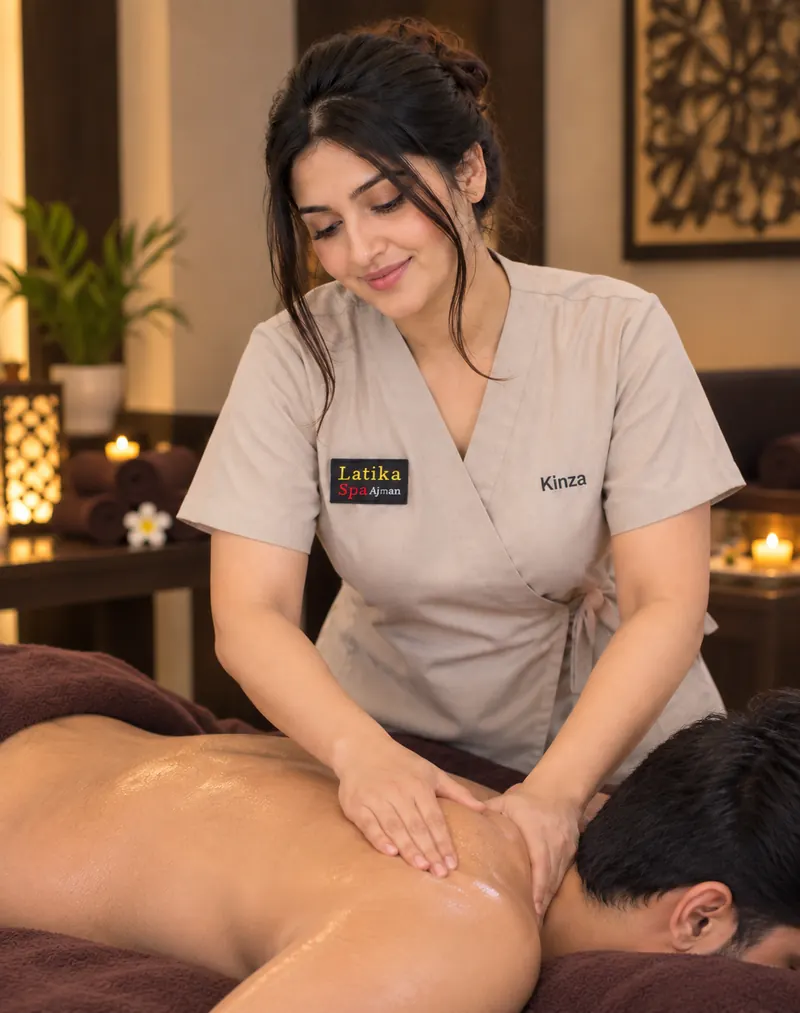
The Main Techniques
Thumb and palm pressure along the shoulders
The therapist uses the thumbs and the heel of the hand to press along the top of the shoulders and between the shoulder blades, where tension often feels like a knot.
Firm kneading of the neck and upper back
Strong, rolling squeezes on the large muscles that run from the neck down to the shoulder blades. This is the heart of the session for most guests.
Long strokes down the back
Oil and long, firm strokes from the neck down either side of the spine help spread the work and connect one area to the next.
Rubbing and friction
Brisk rubbing over the shoulders and upper arms generates warmth, a hallmark of traditional maalish.
Arms and hands
Many guests carry tension down into the forearms and hands from gripping a steering wheel, tools or a phone. The therapist works these areas when time allows.
What Happens During the Session
- Consultation. Tell your therapist where it hurts or feels stiff, how long it has been like that and how firm you like the pressure. They will ask about injuries or health conditions.
- Settling in. The therapist steps out while you get comfortable. Towels keep you covered throughout.
- Warming the area. Oil and long strokes warm up the back and shoulders before deeper work begins.
- Focused work. Most of the session is spent above the waist with firm kneading and thumb pressure, adjusted as you go.
- The rest of the back and arms. The therapist works down the back and through the arms, depending on what you asked for.
- Easing off. Lighter strokes close the session, followed by a few minutes' rest.
How It Feels
Pakistani massage feels firm and purposeful. When the therapist finds a tight area you will feel it, and many guests describe a satisfying sense of the knot "letting go". It should feel intense but manageable, never sharp or unbearable.
Afterwards, that whole area usually feels looser and lighter. Areas that received a lot of attention may feel slightly tender for a day, much like after exercise.
Who It May Suit
- Drivers whose neck and shoulders stiffen after long shifts
- Office workers who spend hours looking down at screens and phones
- Men who carry, lift or reach overhead at work
- Anyone who feels their tension mainly in the upper body
- Guests who prefer firm, focused pressure to a light, flowing massage
- Guests who would like to explain what they need in Urdu
If you want even, very light pressure over the whole body, tell us when you book and we will guide you to a style that suits that better.
When to Check With a Doctor First
Neck and shoulder pain usually comes from everyday tension, but not always. See a doctor before booking if your neck pain:
- Started after a fall, accident or injury
- Is sharp, severe or getting worse
- Comes with numbness, tingling or weakness in the arms or hands
- Comes with headache, dizziness or fever
Also tell your therapist about high blood pressure, heart conditions, recent surgery or any other health issue before the session starts.
Session Details and Price
| Detail | At Latika Spa |
|---|---|
| 60-minute session | AED 99 |
| 90-minute session | AED 150 |
| Pressure | Medium to firm |
| Focus | Neck, shoulders and upper back |
| Oil | Yes |
| Languages | English and Urdu available |
| Hours | 24 hours a day, 7 days a week |
| Payment | Visa, Mastercard or cash |
60 or 90 minutes?
In 60 minutes, your therapist can give thorough attention to the area that needs it most. Choose 90 minutes if you would also like the lower back, arms and legs worked properly, or if your upper body is so tight that you want a slower, more gradual session.
Meet Our Pakistani Specialists
Our Pakistani specialists specialise in this tradition, and every one has at least five years of hands-on experience. All have been trained by our Wellness Director, Anjali Menon, to listen first and adjust the pressure to each guest.
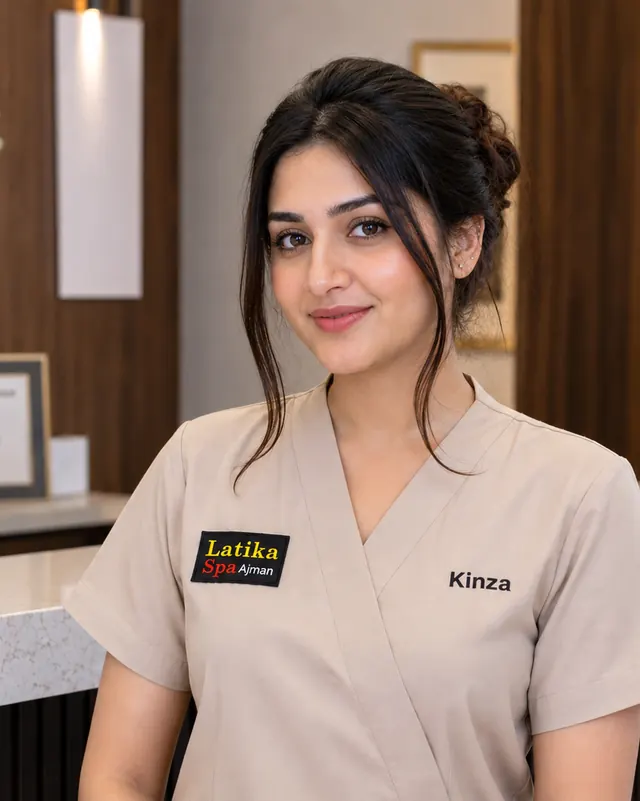 Kinza
Kinza
Specialist- Experience
- 8 years
- Languages
- English, Urdu
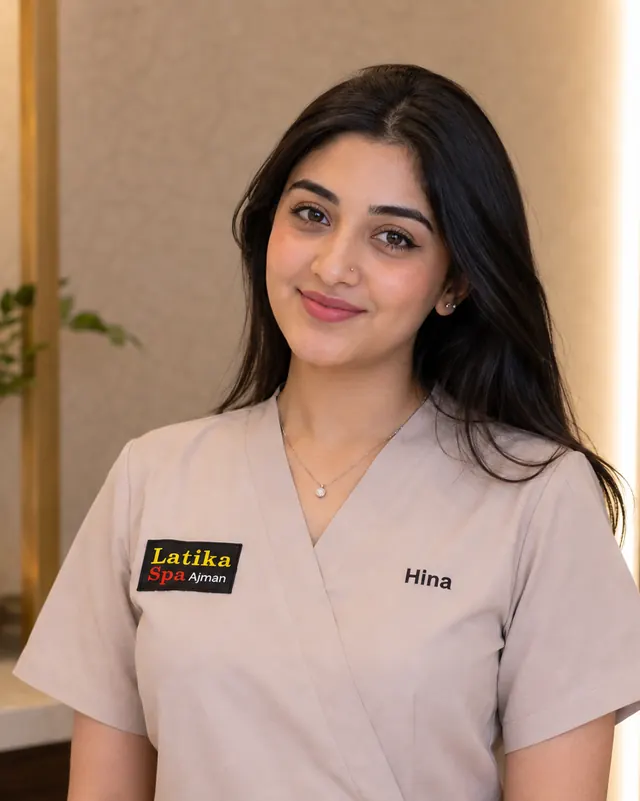 Hina
Hina
Specialist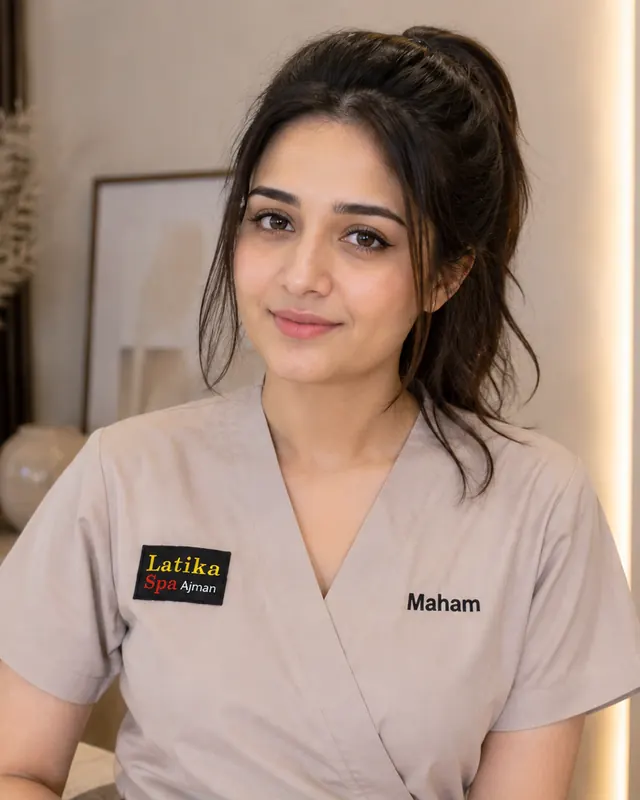 Maham
Maham
Specialist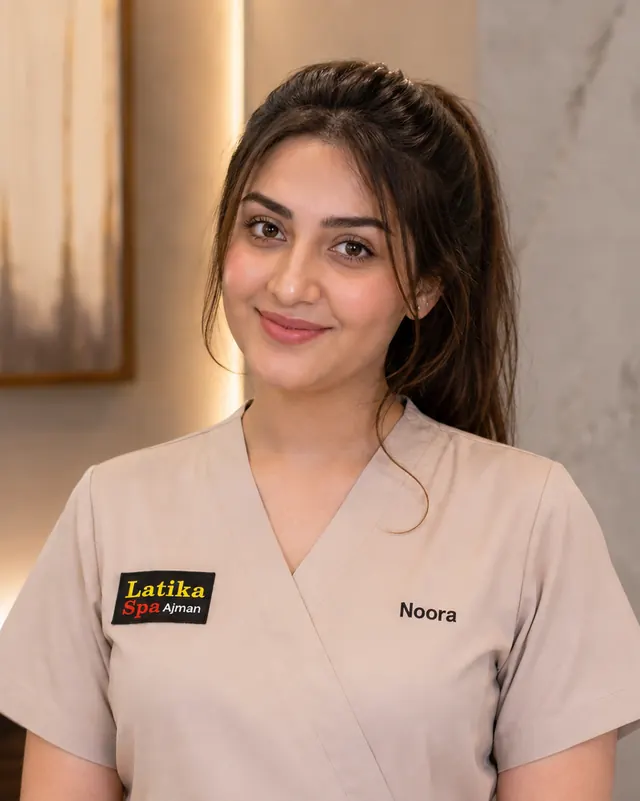 Noora
Noora
SpecialistKinza, with eight years of experience, speaks English and Urdu. Mention a therapist's name when you book and we will arrange your visit around their shift.
Preparing for Your Session
- Think about where the tension is. Is it one side more than the other? Worse in the morning or after work? These details help the therapist focus.
- Mention old injuries, even if they no longer hurt.
- Avoid heavy upper-body training just before your session.
- Arrive a few minutes early so you are not rushing in tense.
Aftercare
- Sit up slowly and roll your shoulders gently.
- Drink some water.
- Keep your neck warm if you are going straight back into strong air-conditioning.
- Avoid heavy lifting or upper-body training for the rest of the day if the area feels tender.
- Check your posture over the next few days. Small changes, such as raising your screen or adjusting your car seat, help the benefit last.
Everyday Habits That Help Your Neck and Shoulders
A session eases tension; habits decide how quickly it comes back. A few simple changes our therapists often suggest:
- Bring your phone up to eye level instead of bending your neck down to it.
- Set your car seat upright with the steering wheel close enough that your shoulders can relax.
- Take short breaks every hour at a desk to roll your shoulders and look away from the screen.
- Carry bags on alternate sides, or use both straps of a backpack.
These are general suggestions, not medical advice. If pain persists, see a doctor or physiotherapist.
Signs Your Tension Lives in the Upper Body
Pakistani massage is most useful when your tension sits high. You may recognise some of these:
- You often rub the back of your neck or roll your shoulders without thinking
- Your shoulders creep up towards your ears when you concentrate
- Turning your head to check a blind spot feels stiff
- You get tension headaches at the end of a long working day
- One shoulder feels noticeably tighter than the other
If several of these sound familiar, a focused upper-body session is likely to suit you. Headaches that are severe, sudden or unusual should always be checked by a doctor.
From the Barber's Chair to a Private Room
Many Pakistani guests know maalish from the barber shop: a few minutes of brisk, strong rubbing on the head, neck and shoulders after a haircut. It is quick, familiar and effective. Our version keeps that firm, practical character but gives it time and space.
| A quick barber-shop maalish | At Latika Spa | |
|---|---|---|
| Length | A few minutes | 60 or 90 minutes |
| Setting | Barber's chair | Private treatment room |
| Areas | Head, neck, shoulders | Neck, shoulders, upper back, plus back and arms as needed |
| Pressure | Strong and brisk | Medium to firm, adjusted to you |
| Consultation | Rarely | Always, before the session starts |
For Drivers
Drivers are among the most regular guests for this style. Hours with the arms raised to a steering wheel, the head pushed slightly forward and the shoulders braced against traffic build tension that a short break does not undo. A focused session on this area, followed by a few simple changes to seat position, is a practical combination. Many drivers book at the end of a long shift, which is easy because we are open 24 hours.
How Long Does the Benefit Last?
It depends on what caused the tension. If your upper body tightens because of work that continues every day, such as driving or screen work, the tension tends to return gradually. Many regular guests book a session every two to four weeks and pair it with small posture changes. Notice how many days you feel looser after each session, and use that to plan your next visit.
A Note on Health
Massage may help ease everyday muscle tension in the shoulder line. It is not a medical treatment. If you have an injury or health condition, speak to your doctor first and tell your therapist before the session. Read our medical disclaimer.
Why Guests Choose Latika Spa for Pakistani Massage
Five quick checks before you book.
Verify Us First
Ajman DED Licence No. 114732, rated 4.9 from 944 Google reviews.
See our Google profileKnow Who Treats You
Kinza, Hina, Maham and Noora lead this style.
Meet the therapistsOne Written Price
One price for every style. Nothing added at the end.
Reserve your timeEasy to Reach
Al Rawda 3, Ajman. Free parking nearby.
Get directionsFacts at a Glance
- Style
- Pakistani Massage
- Pressure
- Medium to firm
- Focus
- Neck, shoulders, upper back
- Best for
- A stiff neck and shoulders
- Price
- AED 99 / 60 min · AED 150 / 90 min
- Hours
- Open 24 hours, 7 days
Pakistani Massage Questions
Does Pakistani massage cover the whole body?
The session focuses on the neck, shoulders and upper back, where most of the time is spent. Your therapist can also work the lower back, arms and legs, especially in a 90-minute session. Say what you would like in the consultation.
Is Pakistani massage painful?
It is firm but should not be painful. Tell your therapist if any area feels too intense and they will ease off straight away.
Can I speak Urdu with my therapist?
Yes. Kinza, one of our Pakistani specialists, speaks English and Urdu. Mention it when you book.
Is Pakistani massage good for a stiff neck from driving?
Many drivers choose it because it concentrates on the area that driving tightens most. If your neck pain is sharp, follows an accident or comes with numbness or tingling, see a doctor before booking.
What should I wear for a Pakistani massage?
Your therapist will explain how to get ready when you arrive. Towels keep you covered throughout, with only the area being worked on uncovered.