
Quick answer: Kerala massage at Lathika Spa is a medium-pressure, full-body style using warm oil and long, slow, even strokes, starting at the back and shoulders. It comes from the oil traditions of Kerala in South India. It costs AED 99 for 60 minutes or AED 150 for 90 minutes, 24 hours a day, with Malayalam-speaking therapists available.
Key Takeaways
- Kerala massage uses warm oil and long, slow, even strokes at medium pressure.
- It comes from the bodywork traditions of South India.
- Sessions start at the back and shoulders, then cover the whole body.
- AED 99 for 60 minutes or AED 150 for 90 minutes, with Malayalam-speaking therapists available.
- DED Licence 114732
- 4.9 from 944 Google reviews
- Open 24 Hours · 365 Days
- Therapists with 5+ years' experience
What Is Kerala Massage?
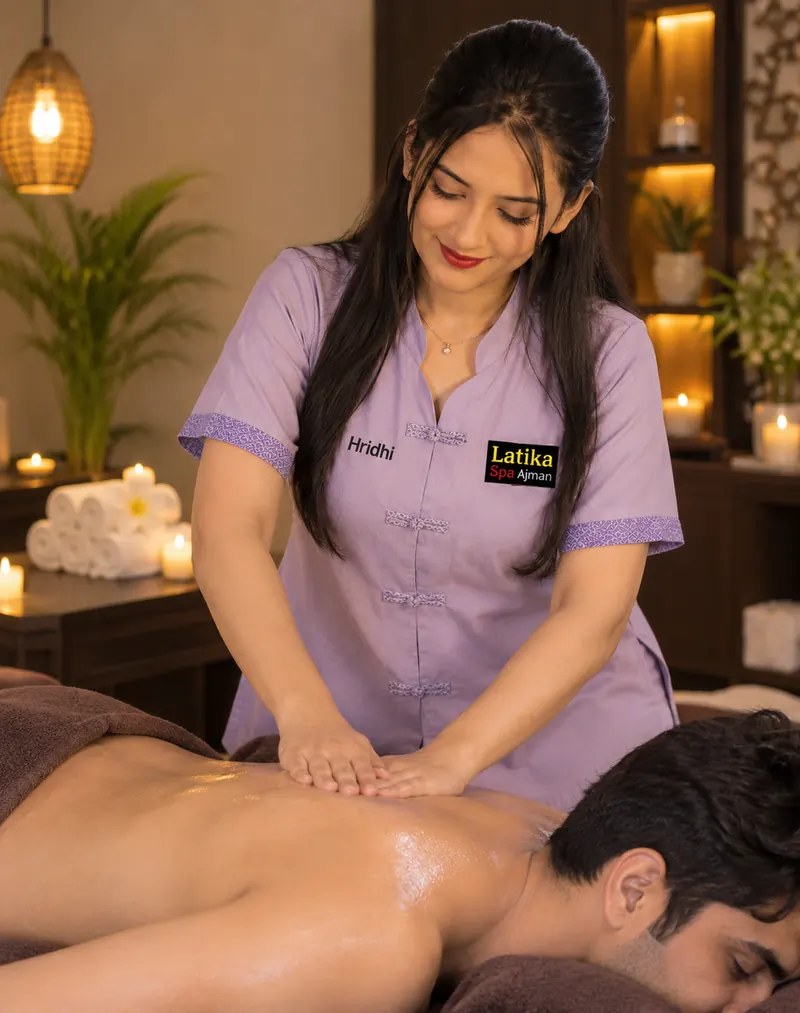
Kerala massage is a full-body treatment that uses warm oil and long, slow, rhythmic strokes, following the bodywork traditions of Kerala in South India. The pace is unhurried and even, so the muscles loosen gradually rather than being pushed.
At Lathika Spa, the session starts at the back and shoulders, where most of our guests carry the weight of a working week, and then moves through the rest of the body at the same steady tempo. The pressure stays at a comfortable medium, which makes it suitable for most guests, including first-timers.
Kerala's Massage Heritage
Kerala, the narrow coastal state along India's south-western shore, has one of the richest bodywork cultures in the world. Oiling the body is part of everyday life there in a way that surprises many visitors: coconut oil is used generously in homes, oil is massaged into children's skin and hair, and an oil rub before bathing is a familiar routine in many families.
Kerala is also the home of Kalaripayattu, one of the oldest martial arts still practised in India. Kalari training has its own tradition of bodywork, known as uzhichil, used to keep fighters supple and to help them recover. Practitioners are known for long, firm strokes and a detailed knowledge of the body's muscles.
Those traditions shaped what people around the world now recognise as Kerala-style massage: plenty of warm oil, long flowing strokes, a deliberate rhythm and a focus on the whole body rather than a single spot. For many Malayali guests in Ajman, it is the touch they grew up with.
The Main Techniques
Warming the oil
The oil is warmed before it touches your skin. This simple step sets the tone for the whole session: the warmth feels comforting and helps tight muscles begin to soften straight away.
Long, flowing strokes
The signature of the style. Your therapist uses the palms and forearms to make long strokes along the length of the back, arms and legs, keeping contact with the skin as they move.
Slow, steady rhythm
Speed matters as much as pressure. The therapist keeps an even, slow rhythm from start to finish. Many guests say that the rhythm, more than anything else, is what helps them switch off.
Medium pressure
Firm enough to reach tired muscles, gentle enough to relax into. The therapist checks the pressure with you early in the session and adjusts it.
Working the whole body
After the back and shoulders, the therapist moves through the arms, hands, legs and feet, maintaining the same rhythm so the session feels like one continuous flow.
What Happens During the Session
- Consultation. Tell your therapist where you feel tight, how much pressure you like and about any injuries, skin sensitivities or health conditions.
- Settling in. The therapist steps out while you get comfortable on the table. Towels keep you covered throughout the session.
- Warming the oil. Your therapist warms the oil and begins at the back and shoulders.
- Back and shoulders. Long, slow strokes along the spine and across the shoulders, with extra time on tight areas.
- Arms, legs and feet. The session continues through the rest of the body at the same even pace.
- Rest. The session ends with lighter strokes and a few minutes to rest before you get up.
How It Feels
Kerala massage feels warm, smooth and deeply calming. Because the strokes are long and the rhythm never changes suddenly, your body stops anticipating the next movement and simply lets go. Many guests fall asleep during the session.
The pressure is noticeable on tight areas but should never feel sharp. Afterwards, most guests describe a heavy, relaxed feeling in the back and shoulders, and a calm mind.
Who It May Suit
- You sit at a desk or drive for long hours
- Your upper body feel tight by the end of the week
- You find it hard to switch off after work
- You enjoy the feeling of warm oil and a slow, steady massage
- You are new to bodywork and want a comfortable medium pressure
- You would like to explain what you need in Malayalam
When to Check With a Doctor First
Speak to a doctor before booking, and tell your therapist before the session, if you have a fever or infection, a skin condition or rash, a known allergy to oils, a recent injury or surgery, a blood clot, a heart condition, uncontrolled blood pressure or any condition for which a doctor has advised against massage.
Session Details and Price
| Detail | At Lathika Spa |
|---|---|
| 60-minute session | AED 99 |
| 90-minute session | AED 150 |
| Pressure | Medium |
| Focus | Back, shoulders and full body |
| Oil | Warm oil |
| Languages | English and Malayalam available |
| Hours | 24 hours a day, 7 days a week |
| Payment | Visa, Mastercard or cash |
60 or 90 minutes?
Sixty minutes covers a full-body session with good time on the shoulder area. Ninety minutes slows the session down further, which suits this style particularly well. The longer strokes and extra time are what many regulars come back for.
Meet the Warm-Oil Specialists
Our therapists for this style specialise in it, and every one has at least five years of hands-on experience. All have been trained by our Wellness Director, Anjali Menon, who herself practised it for years before moving into training.
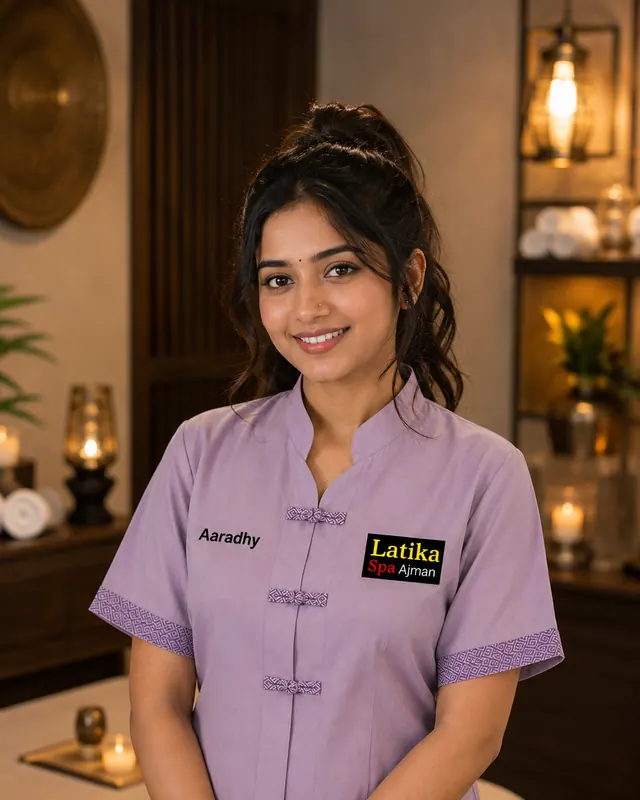 Aradhy
Specialist- Experience
- 8 years
- Languages
- English, Malayalam
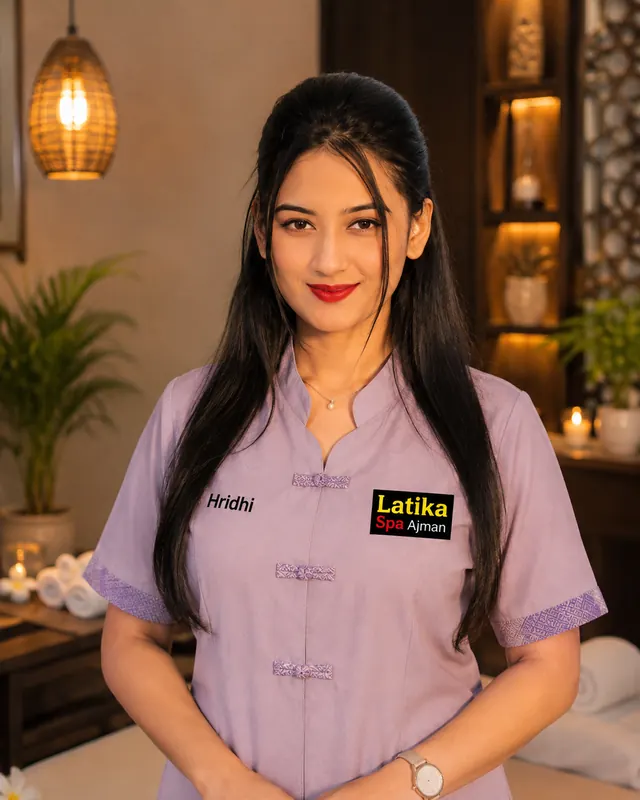 Hridi
Hridi
Specialist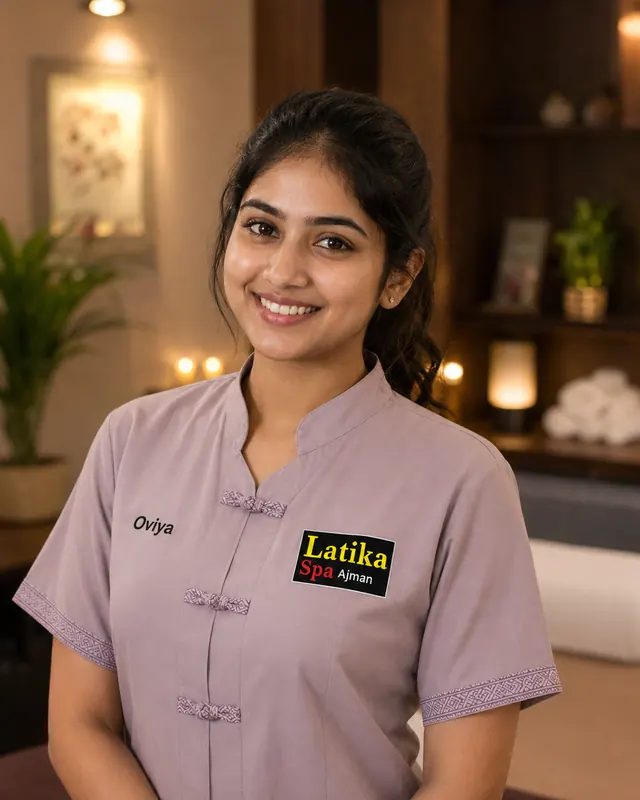 Oviya
Oviya
Specialist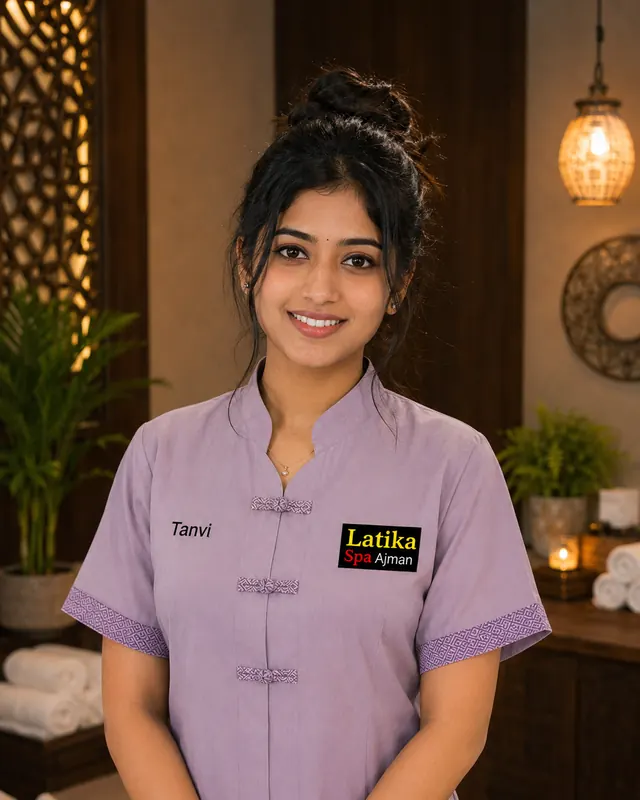 Tanvi
Tanvi
SpecialistAradhy, with eight years of experience, speaks English and Malayalam. If you would like a particular therapist, mention their name when you book and we will arrange your session around their shift.
A Massage Center for Ajman's Malayali Community
Ajman is home to a large Malayali community, and many of our guests tell us that this is the style they trust most because it is the one they know from home. Being able to explain what you need in Malayalam, and to feel the familiar rhythm of Kerala oil work, makes a real difference. Ask for a Malayalam-speaking therapist whenever you book.
How to Prepare
- Eat lightly beforehand.
- Mention any skin sensitivity or oil allergy in the consultation.
- Plan a quiet hour afterwards. It often leaves guests sleepy.
- Bring a change of clothes or wear something you do not mind getting a little oil on.
Aftercare
- Rest for a few minutes before getting up.
- Drink a glass of water.
- Leave the oil for a while if you like; many people in Kerala wait before bathing. Wash it off with a warm shower when you are ready.
- Avoid strenuous activity for the rest of the day.
- Take your time before driving, especially after a late-night session.
How Is It Different From Other Oil Styles?
Many styles use oil. What sets this one apart is the combination of warm oil, very long continuous strokes and a slow, unchanging rhythm. The aim is to let the body settle through steady repetition rather than to work hard on any single spot. If you want a session that feels unhurried from beginning to end, this is the one.
Coconut and Everyday Life in the South
The name Kerala is often linked to the coconut palm, and coconut is woven into everyday life across the state: in cooking, in hair care and in bodywork. For many Malayali families, warm coconut oil massaged into the scalp and body is a childhood memory, often followed by a bath.
That familiarity is part of why this style feels so comforting to many of our guests from the region. If you prefer a particular product, or have a sensitivity to one, tell your therapist during the consultation.
What to Tell Your Therapist
- Where the tiredness sits. Most guests say the upper body; some carry it in the legs.
- Pressure. Medium is the starting point. Ask for a little more or less.
- Pace. If you want the session even slower, say so. This style suits a slow pace.
- Oil. Any allergy, sensitivity or preference.
- Language. If you would rather talk in Malayalam, mention it when booking.
Common Myths
"It is only for people from Kerala." Guests from every background enjoy it. It is one of the most approachable styles for first-timers.
"More oil means a better massage." A light film for smooth strokes is all that is needed, and your therapist removes any excess at the end.
"Slow means weak." The pace is slow, but the medium pressure reaches tired muscles. The slowness is what allows them to let go.
For Long Working Weeks
Most guests who choose it arrive at the end of a long run of working days. Six-day weeks, overtime and long commutes are common in Ajman, and the body rarely gets a full day to recover. This style suits this kind of accumulated tiredness because it does not try to force anything. The warm oil and slow strokes help tight muscles release gradually, and the steady rhythm gives the mind a chance to catch up.
A 90-minute session on your day off, followed by a quiet afternoon or an early night, is a routine many regular guests swear by. Because we are open 24 hours, a late-night session after the last shift of the week works just as well.
Because the strokes are long and continuous, it also suits guests who dislike being prodded or poked. There are no sudden presses, no percussion and no stretching; just a smooth, warm flow from the start of the session to the end.
A Note on Health
Massage may help relieve everyday muscle tension and support relaxation. It is not medical treatment and does not diagnose or cure any condition. If you have an injury or health condition, speak to your doctor first and tell your therapist before the session. Read our medical disclaimer.
Why Guests Choose Lathika Spa for Kerala Massage
Five quick checks before you book.
Verify Us First
Ajman DED Licence No. 114732, rated 4.9 from 944 Google reviews.
See our Google profileKnow Who Treats You
Aradhy, Hridi, Oviya and Tanvi lead this style.
Meet the therapistsOne Written Price
One price for every style. Nothing added at the end.
Reserve your timeEasy to Reach
Al Rawda 3, Ajman. Free parking nearby.
Get directionsFacts at a Glance
- Style
- Kerala Massage
- Pressure
- Medium
- Focus
- Back, shoulders, full body
- Best for
- A tired back and long working weeks
- Price
- AED 99 / 60 min · AED 150 / 90 min
- Hours
- Open 24 hours, 7 days
Questions Guests Ask Us
Why is the oil warmed for a Kerala massage?
Warm oil spreads more easily, feels comfortable on the skin and helps muscles relax from the first stroke. It is one of the defining features of this style.
Is Kerala massage firm or gentle?
It sits in the middle: a steady medium pressure with a slow rhythm. You can ask for a little more or less, and your therapist will adjust.
Can I ask for a Malayalam-speaking therapist?
Yes. Aradhy, one of our specialists, speaks English and Malayalam. Mention it when you book.
Will the oil stain my clothes?
Your therapist uses towels throughout and removes the excess at the end of the session. You may still want to wear older clothes home or shower when you get back.
Is Kerala massage a treatment for back pain?
No. Many guests choose it for a tired, tight back, and it may help ease everyday muscle tension, but it is not a treatment for injury or illness. If your back pain follows an injury or is severe, see a doctor first.