There’s a specific kind of tired that people in Rashidiya know well. It’s not the “I need eight hours of sleep” tired. It’s the shoulder-that-won’t-drop, jaw-that’s-clenched-without-you-noticing kind of tired that builds up from sitting in cars, sitting at desks, and sitting on couches, in that order, most days of the week. Nobody plans for it. It just shows up.
A decent massage center ajman rashidiya residents can actually get to without burning half their evening in traffic isn’t a nice-to-have anymore — for a lot of people it’s become part of how they manage a body that spends most of its day motionless in one seat or another. I say this having talked to a few therapists in the area who see the same complaints on repeat: tight necks, sore lower backs, hips that feel locked. It’s rarely one dramatic injury. It’s weeks of small neglect adding up.
So instead of the usual “massage feels great, go book one” piece, I wanted to dig into something more useful — why certain techniques fix certain problems, what actually separates a therapist who knows what they’re doing from one who’s just running through motions, and the hygiene questions most people never think to ask before they lie down on a table.
What Rashidiya Bodies Tend to Carry
Talk to anyone who’s worked as a massage therapist in this part of Ajman for a while, and a pattern emerges pretty quickly. Long commutes on Sheikh Mohammed Bin Zayed Road tighten up the hips and lower back. Desk jobs round the shoulders forward until the neck starts complaining. And the heat outside means a lot of people quietly stop walking anywhere, which weakens exactly the muscles that would otherwise be holding the spine upright.
None of that is exclusive to Rashidiya. But the sheer number of people here living some version of “drive, sit, drive, sit” does create a recognizable type of tension. A good massage center in ajman rashidiya will usually ask a couple of questions before you even get on the table — how you sleep, whether your job has you seated most of the day, if anything’s been bothering you lately. That’s not small talk. The right session depends entirely on the answer.
“Just Book Me a Massage” Isn’t Really a Request
Here’s the thing — walking in and asking for “a massage” is a bit like walking into a pharmacy and asking for “medicine” with no other details. Technically fine, practically useless. Different techniques are built to solve different problems, and knowing which one fits your specific issue changes whether you walk out feeling better or just walk out.
Matching the Technique to the Actual Problem
This is roughly how a therapist who knows what they’re doing thinks it through, rather than just picking whatever’s on top of the menu.
Chronic Knots That Won’t Budge ? Deep Tissue Massage
If there’s a spot in your shoulder that’s been bothering you for months, gentle techniques won’t do much. Deep Tissue Massage uses slow, firm pressure that reaches the deeper muscle layers underneath. It’s not always relaxing while it’s happening — a fair number of people describe it as “good pain” — but it’s usually the one technique that can actually work through a knot that’s been sitting there stubbornly for weeks.
Stiff Joints and Lost Flexibility ? Thai Massage
Thai Massage combines assisted stretching with pressure-point work, done on a mat instead of a table. It works well for people who’ve been sitting so long they’ve genuinely lost range of motion in their hips or shoulders without really noticing. It can look intense from the outside, honestly a bit alarming if you’ve never seen it, but a properly trained therapist reads your body and adjusts the stretch to what you can actually handle that day.
Sluggish Circulation and General Fatigue ? Russian Massage
Russian Massage relies on rhythmic, flowing strokes meant to get circulation and the lymphatic system moving. People recovering from illness or just feeling run-down tend to gravitate toward it, because the goal isn’t fixing one sore spot — it’s waking up the whole system.
Full-Body Stress That’s Everywhere at Once ? Indian Massage and Pakistani Massage
Indian Massage and Pakistani Massage both draw on techniques passed down through generations of trained practitioners, usually blending head, neck, and shoulder work into a broader full-body session. These tend to suit people whose stress isn’t localized to one spot — think exam season, a brutal work quarter, or just several weeks of bad sleep catching up all at once.
Muscle Fatigue After Physical Activity ? Kerala Massage
Kerala Massage leans on warm herbal oils and long, deliberate strokes rooted in Ayurvedic tradition. It’s a good fit for anyone dealing with tired, overworked muscles after physical activity, or who simply wants something more therapeutic than purely relaxation-focused.
Cold, Tense Days ? Hot Oil Massage
Hot Oil Massage uses heated oil to loosen muscles before any deeper work starts. It’s particularly good for joint stiffness or for anyone who just feels cold and tight — the heat itself does a lot of the initial work before pressure even comes into it.
What Separates a Good Session From a Wasted One
Training Matters More Than the Music Playing in the Background
Soft lighting and calming playlists are pleasant, sure, but they don’t fix a shoulder. What actually matters is whether the person working on you understands anatomy and technique well enough to adapt in real time. Ask how long they’ve been practicing. Mention your specific problem areas out loud. A therapist who actually knows what they’re doing will adjust pressure and technique based on what you tell them, not run the same fixed routine on everyone who walks in.
The Hygiene Questions Almost Nobody Asks
This part gets skipped in most spa articles, which is strange, because it matters. Before booking anywhere, it’s worth asking:
- Are towels and linens changed for every client, not just “cleaned regularly”?
- Is equipment sanitized between sessions?
- Do therapists wash their hands and use fresh oil rather than pouring from a shared, refillable bottle all day?
Any Ajman massage center worth returning to should answer these without dodging the question. If someone seems vague or annoyed you asked, that tells you something.
Safety Details Worth Knowing
A few things that matter more than people realize:
- Mention pregnancy, recent surgery, or heart conditions before the session starts, not halfway through.
- Deep pressure techniques like Deep Tissue Massage should stay away from injuries or areas that are actively inflamed.
- Drink water afterward. Massage moves fluid and metabolic waste through your system, and staying hydrated helps your body actually process that.
- Give yourself a few minutes before jumping straight back into traffic. Rushing out the door tends to undo some of what the session just did.
Building a Routine That Actually Holds Up
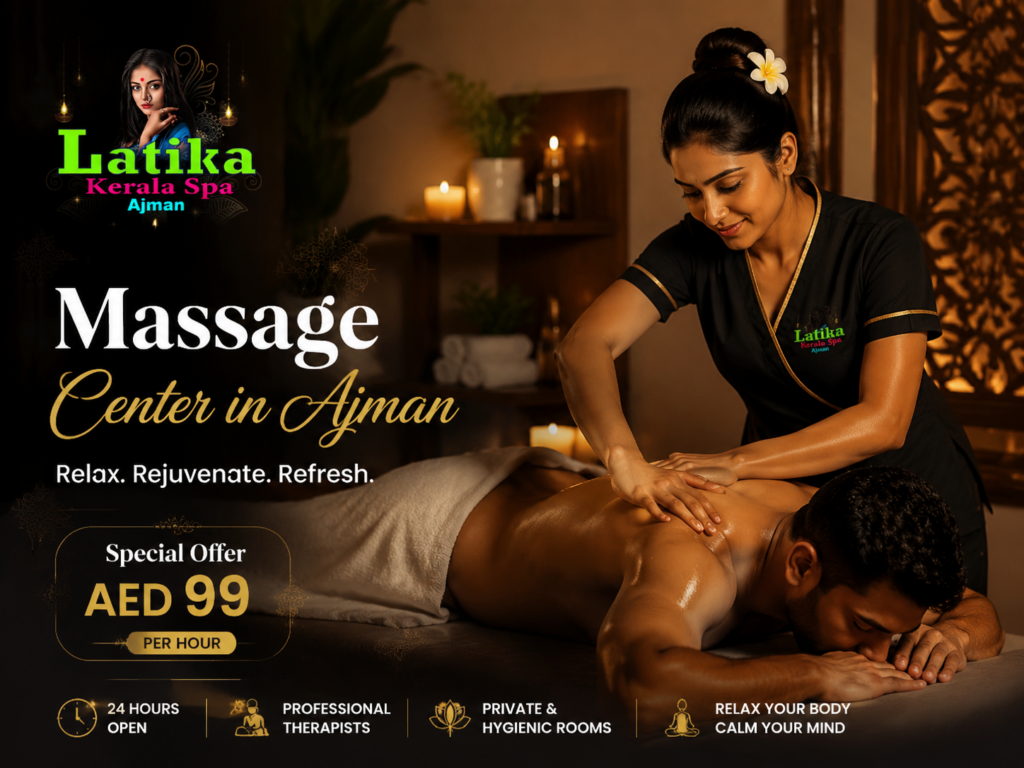
One session, however good, won’t undo months of sitting still. What tends to work is spacing things out — a lot of therapists suggest roughly every two to three weeks for general maintenance, more often during particularly demanding stretches of life. I’ve heard this echoed by people at Latika Spa Ajman as well: clients who treat sessions as regular upkeep report noticeably less tension buildup than the ones who only show up once something already hurts.
Small daily habits help too. A few shoulder rolls at your desk. A short walk after dinner instead of straight to the couch. Adjusting your car seat so your lower back isn’t rounding forward every single drive. None of it is exciting, but it’s the difference between a massage that gives you a few good hours and one that actually supports something longer-lasting.
Picking a Location That Fits How You Actually Live
Convenience isn’t a minor detail here — it’s often the whole decision. Someone drawn to a massage center in ajman corniche location might like pairing a session with a walk along the water afterward. People closer to Rashidiya generally just want somewhere close enough that the appointment doesn’t turn into another traffic-dependent chore. Latika Spa Ajman sits with this reality in mind, which makes it easier for people nearby to treat recovery as routine instead of a rare treat.
Frequently Asked Questions
1. How often should I get a massage if I sit at a desk all day? Most therapists suggest every two to three weeks for general maintenance, with more frequent visits during unusually stressful or physically demanding stretches.
2. Which massage works best for lower back pain caused by driving? Deep Tissue Massage or Thai Massage tend to help most, since both target the hip and lower back tightness that comes from long periods behind the wheel.
3. Is Hot Oil Massage okay for sensitive skin? Usually, yes — but mention any skin sensitivities beforehand so the therapist can pick a suitable oil and adjust the temperature.
4. Can I ask for a specific pressure level during my session? You should. A skilled therapist checks in throughout and adjusts based on your feedback rather than sticking to one fixed intensity for everyone.
5. What hygiene details should I check before choosing a massage center? Confirm linens are changed per client, tools are sanitized between sessions, and oils aren’t reused across clients without proper handling.
6. Is Kerala Massage the same as Indian Massage? Not quite. Kerala Massage typically uses warm herbal oils with strong Ayurvedic roots, while Indian Massage draws on broader traditional techniques focused on releasing full-body tension.
A Last Thought
Recovery rarely happens by accident, especially when your day is built around traffic, a desk, and not much else. It takes a bit of deliberate habit — the right technique for the actual problem, and a place you trust enough to keep going back to. That’s really the quiet appeal of finding a massage center ajman rashidiya locals can rely on without much thought: not a one-off indulgence, but a small, steady part of taking care of yourself. Latika Spa Ajman has shaped its approach around exactly that — treating each visit as one piece of something longer, rather than a quick fix for a bad week.