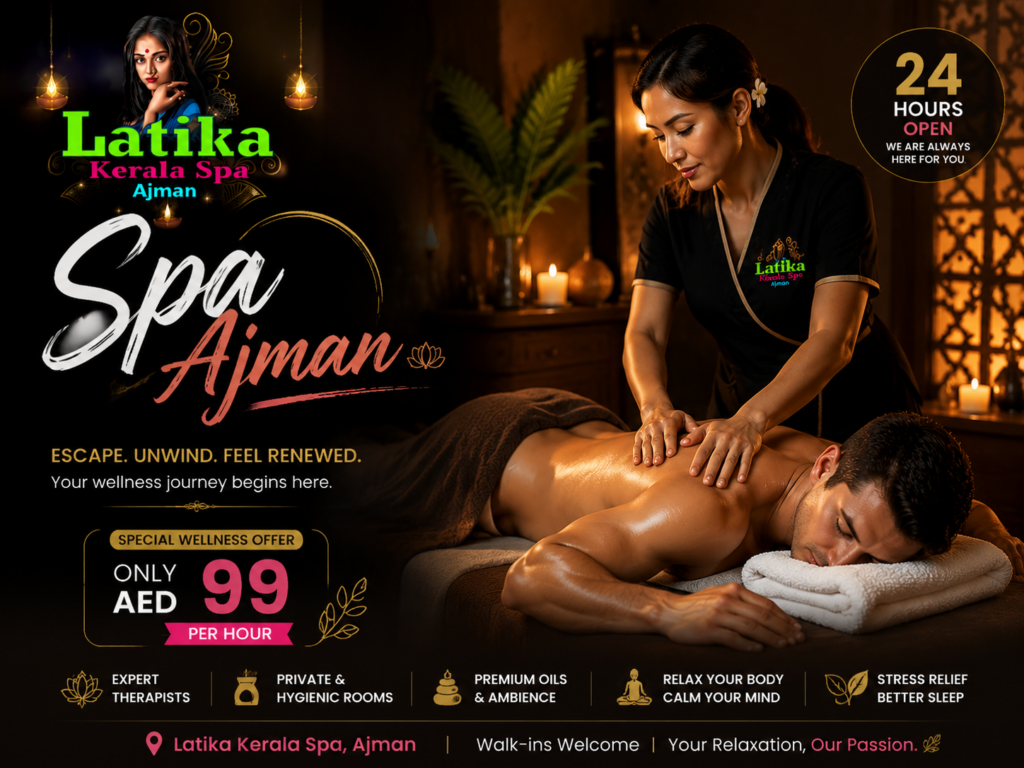
A client walked into Latika Spa Ajman last July, sat down for the usual intake chat, and said something that’s stuck with me since: “I haven’t done anything different. I’m just… tighter than I used to be.” No injury, no new gym routine, nothing she could point to. Just a slow creep of tension in her shoulders that she’d started blaming on stress because nothing else made sense. It’s not stressful. Or at least, it’s not only stress. If you’ve lived in Ajman through more than one summer, your body has probably been quietly fighting the humidity for months without you noticing. Your shoulders sit a bit higher than they should. Your lower back is stiff on days you haven’t lifted anything heavier than groceries. You get a full eight hours and still wake up feeling like you ran errands in your sleep. Most people never connect any of it to the air itself, but that’s genuinely where a lot of this starts. Ajman’s corniche humidity, especially from late spring through early autumn, does something specific to the body — it keeps muscles in a low-grade state of guarding, hour after hour, without any conscious awareness on your part. That’s not a wellness cliché. It’s fairly basic physiology, and once you understand the mechanism, the whole idea of recovery — including a proper spa in Ajman — starts making a lot more sense than “I just need to relax more.”
How Humidity Actually Changes the Way Your Muscles Behave
Sweat cools you down, but only if it can evaporate off your skin. In high humidity, that evaporation slows to a crawl, so your body starts compensating in other ways — heart rate ticks up slightly, blood vessels near the skin surface dilate, and your nervous system stays in a mild state of alert just to keep temperature under control.
Here’s the bit most people miss entirely: that background effort isn’t just mentally draining. It keeps postural muscles — the traps, the muscles running along the spine, the hip flexors — in a subtly braced position for hours at a stretch. Do that across an entire Ajman summer and you end up with a kind of chronic tightness that a good night’s sleep or a half-hearted stretch at home simply doesn’t touch.
Therapists at Ajman Spa see this constantly, particularly among people who spend time near the water — corniche joggers, boat crew, café staff pulling long outdoor shifts. Almost nobody describes it as an injury. It’s usually some version of “I don’t even know why I’m this tight.”
The Three Zones Humidity Hits Hardest
Not every part of the body reacts the same way, and honestly, once you know where to look, the pattern is fairly predictable.
Neck and upper trapezius. This is the first place tension shows up, mostly from that constant low-level bracing against heat stress.
Lower back. People underestimate how dehydrated they get in humid heat, precisely because they’re not visibly drenched in sweat the way they’d be in dry heat. Less fluid means less cushioning around the spinal discs, and the lower back feels it.
Calves and feet. Heat-related vasodilation causes mild swelling here, which gets worse for anyone on their feet for long shifts — retail staff, hospitality workers, anyone standing near the water all day.
Why “Just Stretching More” Doesn’t Fully Solve It
Stretching lengthens muscle fibers temporarily. It doesn’t fix the circulatory sluggishness humidity causes in the first place. When blood flow to a muscle group stays consistently reduced — which happens because the body is busy prioritizing skin-surface circulation over deep muscle circulation — waste products like lactic acid clear out much more slowly. That’s the actual reason a stretch feels great for twenty minutes and then the tightness quietly creeps back.
This is where targeted bodywork earns its place. Not as an indulgence, but as something closer to a physiological reset — a skilled therapist can manually push circulation into tissue layers that stretching on your own simply can’t reach.
Matching the Technique to the Actual Problem
Something worth knowing before you book anything: not every massage style is solving the same problem, even though the menu might make them all sound interchangeable.
Deep Tissue Massage is probably the most direct answer for chronic postural bracing in the neck, shoulders, and lower back. It works slowly through layered muscle tissue and releases the kind of adhesions that build up from weeks of low-grade tension — which is exactly the pattern humidity creates.
Hot Oil Massage tackles the circulatory side of things instead. Warmed oil paired with long, sweeping strokes pushes blood flow back into tissue that’s been stuck in “surface cooling mode” for too long. It works particularly well on calves and feet after a long humid day on your feet.
Kerala Massage, which comes out of traditional Ayurvedic practice, uses rhythmic pressure and herbal-infused oils. A lot of clients describe it as resetting their whole system rather than just easing one sore spot, which makes it a good fit once humidity fatigue has tipped over into general low energy, not just localized tightness.
Thai Massage is worth considering if tightness has actually started limiting your range of motion, since it blends assisted stretching with pressure-point work rather than pure kneading.
Russian Massage and Indian Massage, meanwhile, tend to suit people dealing with longer-standing, more chronic tension rather than a single rough season — both use firmer, rhythmic strokes better suited to sustained patterns than to a quick fix.
At Latika Spa Ajman, therapists usually open with a short conversation about where the tightness actually sits and how long it’s been building. Matching the technique to the cause matters far more than picking whichever one sounds most relaxing on paper.
The Hygiene Question People Don’t Ask Often Enough
Humid climates aren’t just hard on muscles — they’re also more forgiving to bacteria and fungal growth when a spa’s hygiene protocols aren’t tight. That matters more here than in drier climates, and it’s a completely fair thing to ask about before you book anywhere.
A few things worth checking regardless of which spa you go with: fresh linens for every single client rather than ones that just look clean, proper sanitizing of tools and oil dispensers between sessions, licensed and properly trained therapists rather than informal staff, and treatment rooms with decent ventilation, since humidity plus poor airflow is a real hygiene risk, not a minor detail.
A reputable Spa Ajman will answer these questions directly, without any hedging. If a place gets vague or defensive about it, take that as useful information too.
Habits That Make Any Treatment Work Better
Even the most skilled massage session works best alongside a few daily habits, especially during Ajman’s peak humidity stretch.
Hydrate before you’re actually thirsty. Thirst is a lagging signal in humid heat — by the time you feel it, mild dehydration has already started affecting muscle and disc hydration.
Give your body a minute during AC transitions. Moving repeatedly between humid outdoor air and cold indoor air causes muscles to contract and release rapidly, which adds to overall tension over the course of a day. Don’t drop straight into a desk chair the second you walk in.
Rethink your sleep position. Sleeping on your stomach compounds neck strain that’s already being aggravated by humidity-related bracing. Side-sleeping with support under the knees takes real pressure off the lower back.
Don’t skip rest days if you’re exercising outdoors. Corniche walkers and joggers often push through humidity-related fatigue without realizing their recovery window actually needs to be longer here than it would in dry heat.
None of this replaces professional bodywork, but it stretches the benefit considerably. Clients who pair a monthly deep tissue or hot oil session at Latika Spa Ajman with these habits tend to report the tension staying away noticeably longer between visits.
Finding the Right Fit Near You
For anyone living along the water, a spa in Ajman corniche location has one practical edge — it’s easy to book a session right after outdoor activity, while muscles are already warm and more receptive to deep tissue or hot oil work. Timing matters more than most people assume. Treating tension while circulation is still elevated tends to produce longer-lasting results than booking cold, hours after the fact.
Whether you’re chasing down one specific problem area or just trying to stay ahead of what an Ajman summer does to the body over time, understanding the “why” behind the tightness makes it a lot easier to pick the right therapy instead of guessing.
That’s really the whole point of good bodywork — not indulgence, but informed maintenance. It’s the idea Latika Spa Ajman was built around: treating each session as a response to what a client’s body is actually going through, rather than handing everyone the same relaxation package regardless of what brought them in.
Frequently Asked Questions
Why does humidity make muscles feel tighter than dry heat does? Humidity slows sweat evaporation, so the body works harder to regulate temperature. That keeps postural muscles in a low-level braced state for hours at a time, which creates a kind of chronic tightness dry heat doesn’t produce in quite the same way.
Which massage type works best for humidity-related shoulder and neck tension? Deep Tissue Massage tends to be the most effective option here, since it works through layered muscle tissue to release the adhesions that build up from prolonged bracing.
How often should someone get a massage during Ajman’s humid months? A session every three to four weeks is usually enough when it’s paired with decent hydration and posture habits, though this really does vary by activity level and how much tension someone’s carrying to begin with.
Is Hot Oil Massage better than Deep Tissue Massage for swollen calves and feet? For circulatory issues like heat-related swelling, yes — the warming, sweeping strokes of Hot Oil Massage suit improved blood flow better than the slower, more concentrated pressure used in deep tissue work.
What hygiene standards should I check before booking a spa in Ajman? Fresh linens per client, properly sanitized tools and oil dispensers, licensed therapists, and well-ventilated treatment rooms are all worth confirming — especially in a humid climate where bacteria and fungal growth are more of a concern.
Can massage alone fix chronic tension, or do habits matter too? Massage does the essential physical work, but pairing it with proper hydration, mindful posture around AC transitions, and enough rest after outdoor exercise makes the results last considerably longer.