Drive through Ajman Industrial Area at 3 a.m. and you’ll see a version of the city most people never think about. Security guards standing at gates that never close. Warehouse staff loading trucks under sodium lights. Nurses at Sheikh Khalifa Hospital changing shift as the corniche goes quiet. Bakery workers are already elbow-deep in dough for the morning rush. Ajman doesn’t sleep as evenly as its daytime image suggests, and a large slice of its workforce lives on a clock that fights against daylight, temperature, and their own biology every single day.
Nobody warns these workers what rotating or overnight schedules actually do to the body beyond fatigue. It’s not just tiredness — it’s a specific, physical strain that builds in the shoulders, lower back, and hips from sleeping at odd hours, eating on irregular schedules, and holding tension differently when your body doesn’t know if it’s day or night. This is one of the quieter reasons people start searching for a trusted Massage Center Ajman, often after months of unexplained stiffness that regular painkillers barely touch.
Why Shift Work Hurts Differently Than a Normal Workday
A body running on a disrupted circadian rhythm doesn’t just feel sleepy — it produces cortisol and melatonin at the wrong times, which affects muscle recovery directly. Normally, deep sleep is when torn muscle fibers repair and inflammation settles. When sleep is chopped into fragmented daytime chunks, as it often is for night-shift workers, that repair window shrinks. The result is muscles that never fully recover between shifts, even in people who aren’t doing physically demanding jobs.
Add Ajman’s specific work patterns on top of that. A security guard stands for ten to twelve hours with almost no movement variation. A nurse alternates between rushing and standing still at a station. A warehouse worker lifts and twists repeatedly during the coldest, quietest hours when the body’s pain sensitivity is actually heightened, not lowered, due to lower core temperature and cortisol dips. None of this is talked about much, but therapists at established wellness spaces — including Latika Spa Ajman — increasingly see this exact pattern among clients working rotating schedules across the emirate’s logistics, healthcare, and security sectors.
The Three Areas That Take the Hardest Hit
The Lower Back
Standing or sitting for extended, irregular hours without a fixed routine puts uneven load on the lower back. Unlike a 9-to-5 worker whose body adapts to a predictable rhythm of sitting, walking, and resting, a shift worker’s lower back rarely gets a consistent recovery pattern, which leads to chronic dull aching rather than sharp injury — often dismissed until it becomes hard to ignore.
The Shoulders and Neck
Warehouse and delivery staff working overnight often report tighter shoulders than their daytime counterparts doing similar physical work. Cooler night air, combined with less natural movement and stretching (there’s no lunchtime walk outside when the sun isn’t up), causes muscles to stay contracted longer.
The Hips and Legs
Nurses, guards, and retail staff on their feet for long stretches frequently develop hip and calf tightness that worsens specifically after several night shifts in a row. This is partly circulatory — blood pooling differently during long standing periods at night when the body’s normal circadian dip in blood pressure clashes with the demand to stay alert and upright.
Why This Group Is Often Overlooked in Wellness Conversations
Most spa and wellness content in Ajman — and across the UAE generally — speaks to office workers, tourists, or people managing everyday stress. Shift workers rarely see advice written for their actual schedule. They’re told to “get more sleep” or “manage stress better,” advice that doesn’t account for the fact that their bodies are working against a fundamentally disrupted rhythm they can’t simply opt out of.
This is exactly the gap a good Ajman massage center can fill — not with generic relaxation packages, but with therapists who understand that a client coming in at 10 a.m. after a night shift needs something different from a client coming in after a normal office day. The goal isn’t just relaxation; it’s targeted physical recovery timed around an irregular schedule.
Massage Techniques for Shift Workers in Ajman
Different massage traditions serve different recovery needs, and for shift workers specifically, the choice matters more than people realize.
- Deep Tissue Massage works well for warehouse staff and delivery workers carrying chronic tightness from repetitive lifting and standing — it reaches the deeper muscle layers that surface-level relaxation techniques don’t touch.
- Hot Oil Massage is particularly suited to workers coming off overnight shifts in cooler warehouse or outdoor environments, since the warmth helps restart circulation that’s been sluggish from hours of cold, still air.
- Russian Massage, with its firmer, more structured pressure, tends to suit workers needing a more clinical approach to persistent lower back tension rather than a purely relaxing session.
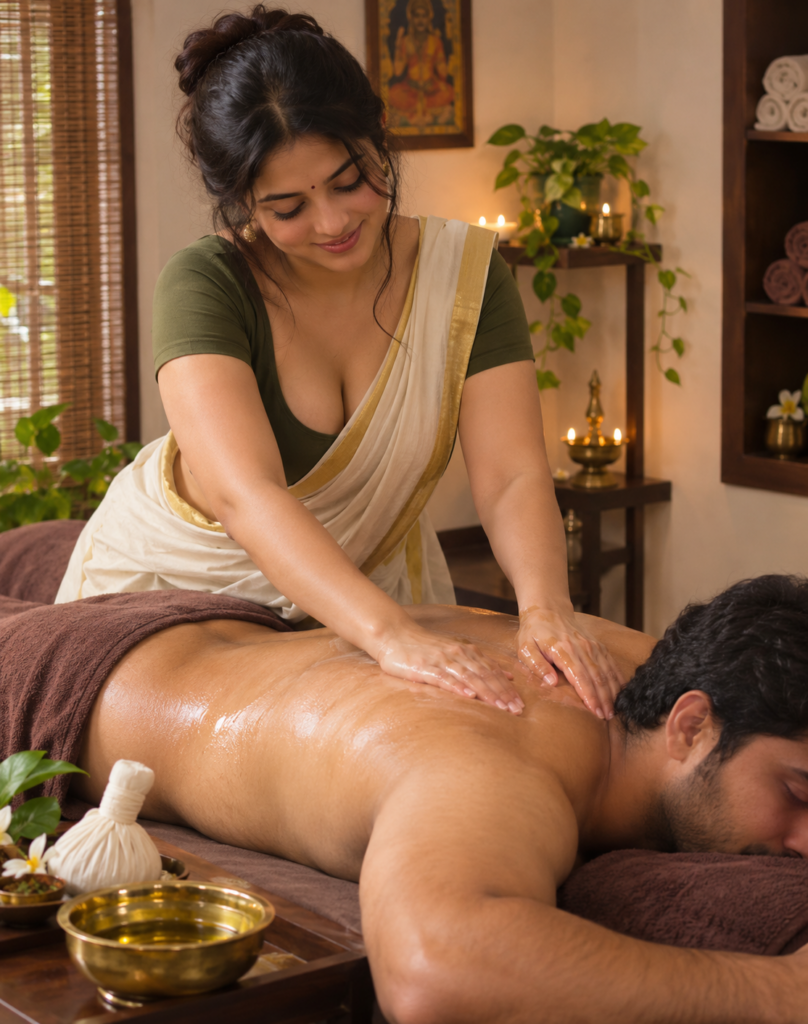
- Kerala Massage offers a slower, rhythmic, oil-based approach rooted in Ayurvedic practice, often preferred by workers whose bodies need restoration as much as physical release — particularly helpful for the fatigue that builds from disrupted sleep cycles rather than pure physical exertion.
- Thai Massage incorporates stretching and joint mobilization, useful for hip and leg tightness common among nurses and retail staff who spend entire shifts standing.
- Indian Massage and Pakistani Massage techniques, both well established across Ajman’s wellness scene, offer distinct pressure styles that many shift workers from South Asian backgrounds specifically request, often because the technique feels familiar from home.
A therapist who takes five minutes to ask about your actual schedule — when you slept last, how many hours you stood, whether you just finished a night shift or are about to start one — will choose very differently than one working from a fixed menu.
What to Look for in a Massage Center Ajman When You Work Odd Hours
Flexible Booking Hours
Shift workers can’t always book a 6 p.m. appointment like everyone else. A center offering earlier morning or midday slots — the times when night-shift workers are actually free — makes a real difference. Many people specifically search for an ajman massage center whatsapp number simply because messaging is easier than calling during odd hours, especially right before or after a shift when speaking isn’t convenient.
Therapist Communication
A good therapist will ask about your schedule before starting, not just your pain points. This changes technique, pressure, and even session length in ways that matter for recovery.
Hygiene and Consistency
For anyone visiting regularly around a demanding schedule, consistent hygiene standards — fresh linens, sanitized tools, a clean treatment space every single time — aren’t a bonus, they’re the baseline that makes repeat visits worthwhile.
Realistic Session Pacing
One session won’t undo months of disrupted sleep and standing fatigue. Most shift workers see meaningful improvement with a session every ten to fourteen days, adjusted around their rotation pattern, not a fixed weekly calendar.
Small Habits That Help Between Sessions
Massage therapy works best paired with small adjustments shift workers can realistically maintain:
- Stretch before your shift, not just after. A tight body starting a twelve-hour shift compounds fatigue faster than one that starts loose.
- Change standing position every hour if possible. Shifting weight, rolling ankles, or taking two minutes to walk when the job allows can meaningfully reduce hip and lower back strain.
- Hydrate on a schedule, not by thirst. Irregular hours often mean people forget to drink water consistently; dehydrated muscle holds tension longer regardless of massage frequency.
- Protect your sleep window fiercely. Blackout curtains, phone on silent, consistent nap timing — even imperfect sleep structure helps muscle recovery more than people expect.
- Don’t skip the “off” day recovery. The day after a run of night shifts is often the most important day for the body to actually rest, not catch up on errands.
None of these replace professional bodywork, but they extend how long the benefits of a session actually last.
A Community Often Left Out of the Conversation
Ajman’s large Malayali, Indian, and Pakistani workforce makes up a significant share of its overnight and shift-based labor — security, healthcare support, logistics, hospitality. Many in this community specifically look for a malayali massage center ajman residents recommend by word of mouth, partly for language comfort during consultation, and partly because certain traditional techniques — Kerala-style rhythm, specific oil-based methods — feel more familiar and effective for the kind of fatigue they’re actually carrying.
This matters more than it might seem. A worker who can clearly explain “I just finished four night shifts and my lower back has been locked for two days” to a therapist who understands both the language and the physical pattern gets a far more targeted session than one navigating a language gap on top of physical exhaustion.
Latika Spa Ajman sees this pattern regularly — the guard who can’t explain why standing has started to hurt more than it used to, the nurse whose shoulders lock up somewhere around hour nine of a shift, the warehouse worker who assumed the ache was just part of the job. Understanding that shift work creates a distinct physical pattern, not just ordinary tiredness, changes how it should be treated. For Ajman’s overnight workforce — the people keeping the city running while most of it sleeps — finding a Massage Center Ajman built around real recovery, not just relaxation, can make a genuine difference in how the body holds up over months and years of irregular hours.
FAQ
1. Why do night-shift workers feel more muscle stiffness than day-shift workers doing similar jobs?
Disrupted sleep reduces the body’s deep-sleep recovery window, when muscle repair mostly happens. Combined with cooler overnight temperatures and less natural movement, this leads to muscles staying tighter for longer between shifts.
2. Which massage type works best for someone recovering from back-to-back night shifts?
Hot Oil Massage and Kerala Massage are often well suited, since both combine circulation support with a restorative, rhythmic approach rather than intense pressure alone.
3. How often should a shift worker get a massage?
Roughly every ten to fourteen days, timed around your rotation pattern rather than a fixed weekly schedule, tends to work best for ongoing recovery.
4. Can I book an appointment outside normal spa hours if I work nights?
Many centers offer flexible morning or midday slots specifically for shift workers — it’s worth checking directly, and many people find it easiest to message an ajman massage center whatsapp number to confirm timing that fits an irregular schedule.
5. Is Deep Tissue Massage safe for someone who’s sleep-deprived?
Generally yes, but it’s worth telling your therapist beforehand — pressure and session length are often adjusted for clients who are significantly sleep-deprived to avoid over-fatiguing the body.
6. Why do some workers specifically look for a Malayali or South Asian therapist?
Language comfort during consultation matters, and certain traditional techniques feel more familiar and targeted for people from those backgrounds, which is part of why searches for a malayali massage center ajman community trusts remain common.