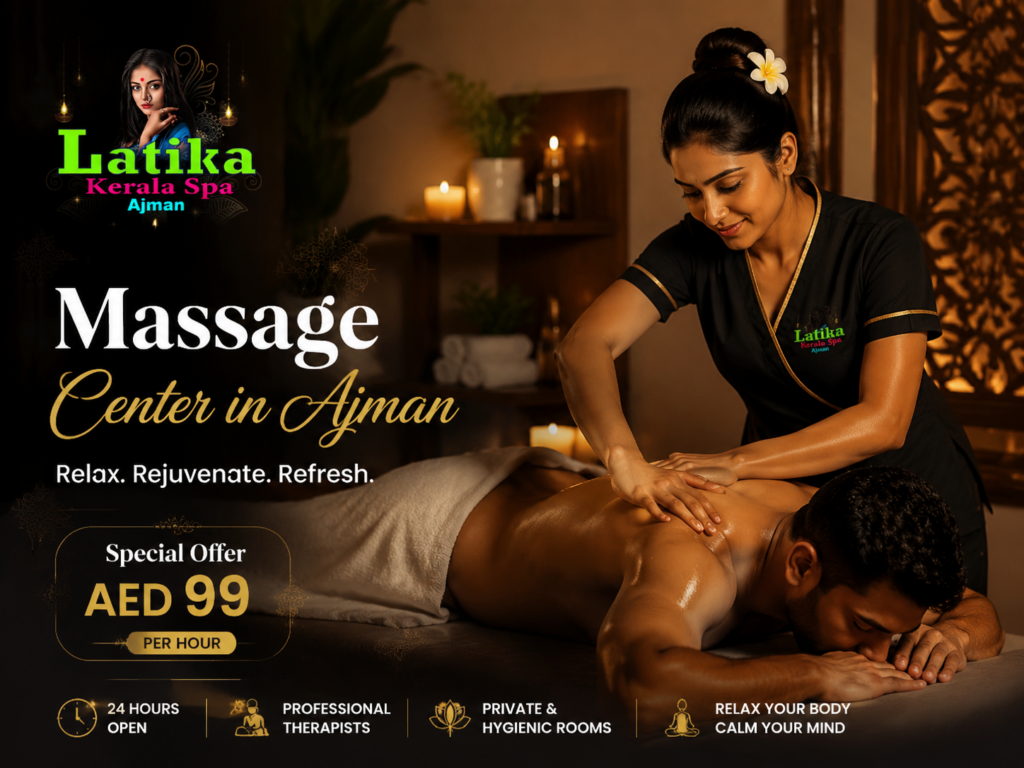
There’s a particular kind of tiredness that has nothing to do with sleep, and most people in Ajman have felt it without being able to name it. You step out of a freezing office into 42-degree heat, sit in traffic for forty minutes with your shoulders locked around your ears, then collapse onto a couch that does nothing for the knot forming between your shoulder blades. It’s this exact pattern that keeps sending residents searching for a reliable massage center in Ajman, not out of luxury, but out of genuine need. Physiotherapists and massage therapists across the emirate see the aftermath of this cycle every single day.
This isn’t another article telling you that a massage feels nice. It’s a look at why your body is holding tension the way it is, what’s actually happening physiologically when you go hot-to-cold-to-hot all day, and how a properly run massage center in Ajman addresses that pattern instead of just papering over it for an hour.
Why Ajman’s Fast-Growing Lifestyle Is Taking a Toll on Your Body
Ajman has grown quickly — more residential towers, more commute time, more people working desk jobs that didn’t exist here a decade ago. The lifestyle shift has outpaced the habits people use to cope with it.
The Hidden Cost of AC and Humidity Swings
Constant temperature swings force your muscles to contract and release repeatedly throughout the day. Cold air conditioning tightens the fascia — the connective tissue wrapping your muscles — while stepping into humid outdoor air causes rapid vasodilation. Do this five or six times a day, every day, and you get a baseline level of muscular guarding that never fully switches off. Most people mistake this for “just being tired.”
Desk Jobs, Traffic, and the Rise of “Ajman Neck”
Therapists at clinics across the city have started informally calling it “Ajman neck” — a forward head posture combined with rounded shoulders that comes from hours at a desk followed by hours gripping a steering wheel in traffic. It’s not dramatic. It creeps in slowly, showing up first as tension headaches, then as a dull ache between the shoulder blades, then eventually as reduced range of motion in the neck.
What a Good Massage Center in Ajman Actually Does for You
It’s Not Just Relaxation — It’s Recovery
A well-run massage center ajman residents trust isn’t selling you forty-five minutes of feeling pampered. It’s addressing accumulated muscular strain with techniques matched to what your body is actually doing wrong. That distinction matters, because the wrong technique applied to the wrong problem can leave you sorer than before you walked in.
How Therapists Assess What Your Body Needs
Experienced therapists start with a quick conversation and a physical check — how you’re sitting, where you’re guarding, whether one shoulder sits higher than the other. This isn’t a formality. It determines whether you need slow, sustained pressure to release deep adhesions or lighter, rhythmic strokes to calm an overactive nervous system. Skipping this step is one of the biggest differences between a memorable session and a forgettable one.
Choosing the Right Massage Type for Your Body’s Signals
Not every ache calls for the same approach. Here’s how the main therapeutic styles map onto common complaints.
Thai Massage for Stiffness and Flexibility
If your hips and lower back feel locked after a day of sitting, Thai Massage — with its assisted stretching and rhythmic compression — restores range of motion in a way that passive techniques can’t.
Deep Tissue Massage for Chronic Knots
For the stubborn knot that’s been sitting in your trapezius for months, Deep Tissue Massage works through layers of muscle slowly, targeting adhesions rather than just skimming the surface.
Kerala Massage and Ayurvedic-Inspired Relief
Many residents specifically look for a malayali massage center ajman technique because Kerala Massage draws on Ayurvedic principles — warm herbal oils, rhythmic long strokes, and a focus on balancing the nervous system rather than just the muscles. It’s particularly effective for people dealing with stress-related tension rather than a single injury.
Pakistani Massage Traditions
A traditional Pakistani massage center in ajman style typically combines firm kneading with joint mobilization, drawing on techniques passed down through generations of practice. It tends to suit people who want firm, confident pressure rather than a gentler touch.
Russian Massage for Circulation
Russian Massage emphasizes rhythmic, percussive movements designed to boost circulation and flush out metabolic waste from tired muscles — useful for anyone who’s been on their feet all day or dealing with poor blood flow from long hours of sitting.
Hot Oil Massage for Joint and Muscle Nourishment
When joints feel stiff rather than just muscles feeling sore, Hot Oil Massage uses warmed oils to improve tissue pliability and ease movement, particularly helpful for people with arthritic tendencies or chronic joint stiffness.
Indian Massage Traditional Techniques
Indian Massage traditions typically combine head, neck, and shoulder work with broader full-body strokes, and many people find this combination particularly effective for tension headaches that start at the base of the skull.
Hygiene, Safety, and What to Ask Before You Book
E-E-A-T isn’t just a search engine concept — it’s exactly what you should be checking for before you hand your body over to a stranger for an hour. A few practical questions worth asking any spa or clinic:
- Are fresh linens and sanitized tools used for every single client, not just “most” clients?
- Are therapists trained and certified in the specific technique you’re booking?
- Will they ask about existing injuries, pregnancy, or medical conditions before starting?
- Is the oil or product used disclosed, in case of allergies?
A reputable center will answer these without hesitation. If a place is vague or dismissive about hygiene protocols, that’s a signal to walk away, regardless of how good the reviews look online.
Building a Realistic Wellness Routine in Ajman
One session won’t undo six months of desk posture. What actually works is a rhythm — perhaps a deep tissue or Thai session every two to three weeks, paired with small daily habits: standing up every hour, adjusting your car seat so your shoulders aren’t hunched, and stretching your neck laterally instead of just nodding it forward and back. Massage therapy works best as maintenance, not emergency repair.
Frequently Asked Questions
1. How often should I get a massage if I have a desk job? Every two to three weeks is a reasonable starting point for most people managing posture-related tension, though your therapist can adjust this based on how your body responds.
2. Is Deep Tissue Massage painful? It can feel intense in areas with significant tension, but it shouldn’t be sharply painful. Communicate with your therapist throughout the session so pressure stays within a productive range.
3. What’s the difference between Kerala Massage and Hot Oil Massage? Kerala Massage is rooted in Ayurvedic tradition and focuses on balancing the whole system with herbal oils, while Hot Oil Massage is more targeted toward joint and muscle nourishment using warmed oils for pliability.
4. Can I get a massage if I have a existing back injury? Always disclose any injury before your session. A qualified therapist will adjust technique and pressure, or in some cases recommend you consult a doctor first.
5. Are Thai Massage and Deep Tissue Massage suitable for beginners? Yes, but if it’s your first time, mention that clearly so the therapist can moderate intensity and check in with you as the session progresses.
6. How do I know if a massage center in Ajman follows proper hygiene standards? Ask directly about linen changes, tool sanitation, and therapist certification. A transparent, confident answer is a good sign; vagueness is not.
If your body has been sending you these signals for a while — the tight neck by 4 pm, the lower back ache after the commute home, the shoulders that never quite drop — it might be worth paying attention rather than pushing through it again tomorrow. Latika Spa Ajman was built around exactly this kind of practical, technique-matched approach, with therapists trained across Thai, Deep Tissue, Kerala, Pakistani, Russian, Hot Oil, and Indian massage styles, so the session actually matches what your body needs rather than a one-size-fits-all routine. Whether you’re dealing with chronic tension or just need to reset after a long stretch of bad posture, Latika Spa Ajman’s therapists take the time to ask the right questions before they start working on you — because a massage that’s matched to the actual problem is the only kind that really helps.