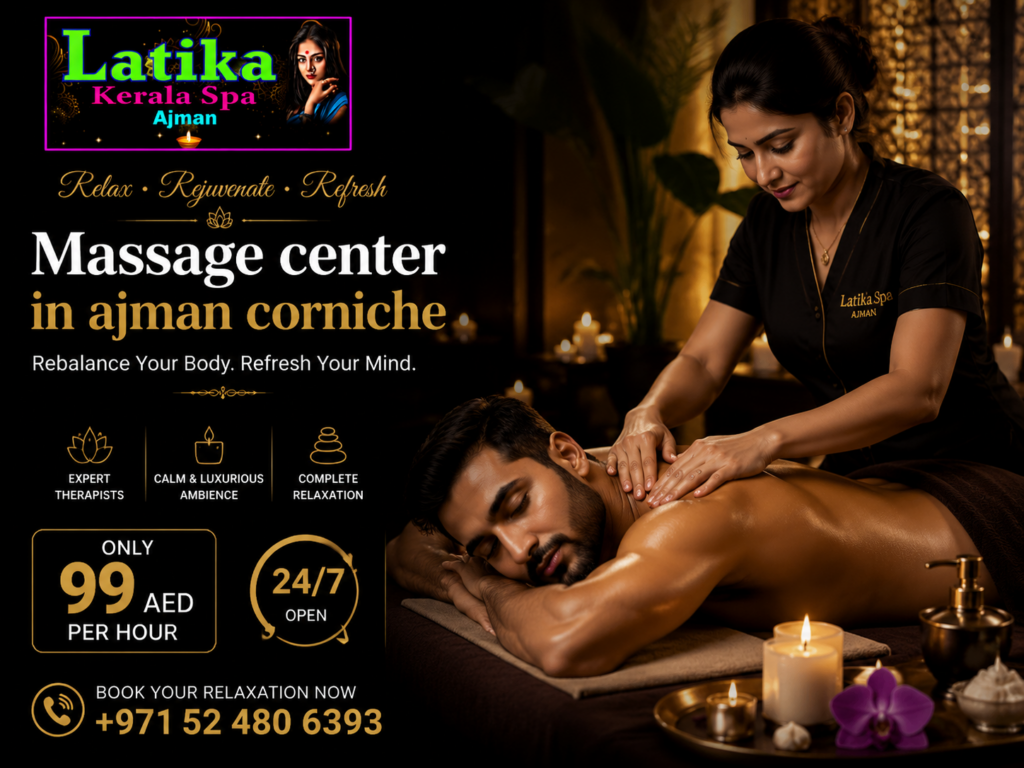
There’s a particular kind of tiredness that settles into people who live near the Ajman Corniche. It isn’t the dramatic exhaustion of a hard workout — it’s quieter. A stiff neck after a long shift at a desk. A dull ache across the shoulders that shows up around 4 p.m. and never fully disappears. Locals often blame it on “just getting older” or “sitting too much,” but there’s a more specific culprit hiding in plain sight: the combination of humid coastal air, long commutes along the Corniche road, and hours spent hunched over laptops or steering wheels. This isn’t a scare story about the weather. It’s a look at why so many residents searching for a massage center in Ajman corniche aren’t just chasing relaxation — they’re trying to solve a very real physical problem that builds up quietly over weeks and months.
The Hidden Cost of Corniche Living
Ajman’s Corniche is beautiful — the sea breeze, the walking paths, and the evening crowds enjoying the view. But that same humid air, mixed with long hours of air conditioning indoors, does something interesting to the body. Humidity keeps joints and muscles slightly swollen throughout the day, while constant exposure to cold AC causes muscles to tighten defensively. The result is a tug-of-war inside your shoulders and lower back that most people never notice until it turns into a headache or a stiff neck that won’t loosen up with stretching alone.
Add to that the daily grind: government employees driving along Sheikh Khalifa Bin Zayed Street, retail staff standing for ten-hour shifts near the souk, or remote workers glued to laptops in apartments overlooking the water. None of these routines are dramatic on their own. Together, they create chronic, low-grade tension that most people describe as “just feeling heavy” rather than actual pain.
Why This Matters More in a Coastal City Like Ajman
Coastal humidity affects circulation differently than dry desert heat further inland. Blood vessels near the skin’s surface dilate in humid conditions, which can leave muscles feeling fatigued even without physical exertion. This is one reason why residents of Ajman Corniche often report feeling “drained” despite not doing anything particularly strenuous — the body is working harder than it looks like it is.
What Actually Helps: Matching the Massage to the Problem
Not every type of massage solves the same problem, and this is where a lot of people go wrong. Booking a random session without understanding what your body actually needs is a bit like taking painkillers without knowing what’s causing the pain.
For Desk-Related Neck and Shoulder Tension Deep Tissue Massage is typically the most effective option here. It works on the deeper layers of muscle and connective tissue, targeting the knots that build up from hours of poor posture. It’s not always the gentlest experience, but for someone who’s been hunched over a screen for eight hours a day, it tends to bring the most noticeable relief.
For General Fatigue and Poor Circulation Hot Oil Massage is worth considering for people dealing with the humidity-related sluggishness mentioned earlier. Warm oil helps relax surface tension while improving blood flow, which can counteract some of the circulation issues caused by constant air-conditioning exposure.
For Long-Term Stress and Nervous System Reset Thai Massage uses stretching and pressure-point techniques that go beyond muscle relief — it’s particularly useful for people whose stress shows up as tightness in the hips, lower back, and jaw. It’s a good option for those who feel “wound up” rather than simply sore.
For Deep Structural Realignment Russian Massage focuses on rhythmic, flowing strokes combined with joint mobilization, and is often recommended for people recovering from long periods of poor posture or those who spend hours driving.
For Full-Body Relief Rooted in Traditional Practice Indian Massage, Pakistani Massage, and Kerala Massage each bring their own traditional approach — often incorporating warm herbal oils and techniques passed down through generations of practice. These styles are especially popular among residents who grew up with these traditions at home and are looking for something familiar, effective, and rooted in genuine therapeutic knowledge rather than a quick spa gimmick.
Therapists who specialize in these techniques usually have years of hands-on training, and a well-run spa in Ajman corniche will always be transparent about which therapist is trained in which style — this matters more than people realize, since technique quality varies enormously between practitioners.
Hygiene and Safety: What You Should Actually Check Before Booking
This is the part most blogs skip, and it shouldn’t be skipped. A reputable massage center in Ajman will:
- Use fresh, laundered linens for every single client — not just “clean-looking” ones
- Sanitize massage tools and surfaces between sessions, not just at the end of the day
- Employ licensed, trained therapists rather than staff with minimal instruction
- Ask about medical history or injuries before starting any deep tissue or high-pressure technique
- Avoid deep pressure work on pregnant clients, recent surgery patients, or anyone with unexplained pain, referring them to a doctor instead
If a spa hesitates to answer questions about therapist training or hygiene protocols, that’s a signal worth paying attention to. Genuine wellness centers are usually happy to explain their standards — it reflects confidence in the service they provide.
How Often Should You Actually Go?
There’s no universal answer, but a reasonable guideline for people dealing with Corniche-related tension is once every two to three weeks for maintenance, and weekly for a short period (three to four sessions) if you’re actively trying to resolve chronic stiffness. Going more frequently than that without professional guidance isn’t necessarily more effective — the body needs time to respond to deep tissue work, and overdoing it can sometimes cause more soreness rather than less.
It’s also worth pairing massage therapy with basic daily habits: standing up every 45 minutes if you work at a desk, staying hydrated in the humidity, and stretching the neck and shoulders before bed. Massage works best as part of a routine, not as a one-time fix.
Finding the Right Fit Among Ajman’s Options
Anyone searching for a spa in Ajman will notice there’s no shortage of options, but not all of them are equal in training, hygiene, or technique variety. It’s worth asking directly which massage styles a center offers, how long therapists have been trained in each one, and what their approach is to client comfort and safety. Latika Spa Ajman is one of the centers in the area that’s built its reputation around exactly these details — trained therapists, clear hygiene practices, and a range of techniques suited to different physical needs rather than a one-size-fits-all approach.
Frequently Asked Questions
1. What is the best massage for someone who sits at a desk all day?
Deep Tissue Massage is generally the most effective for desk-related neck and shoulder tension, since it targets the deeper muscle layers where stiffness builds up from prolonged sitting.
2. Can humidity really affect how tired my muscles feel?
Yes. Humid coastal air affects blood vessel dilation and circulation, which can make muscles feel fatigued even without physical exertion — a common experience for people living near the Ajman Corniche.
3. Is Hot Oil Massage suitable for people with sensitive skin?
Most centers use mild, skin-friendly oils, but it’s always worth informing your therapist about any skin sensitivities or allergies beforehand so they can adjust the products used.
4. How do I know if a massage center in Ajman corniche follows proper hygiene standards?
Look for fresh linens per client, visible sanitization between sessions, and licensed therapists. A reputable center will answer questions about these practices without hesitation.
5. Is it safe to get a massage during pregnancy?
Deep tissue and high-pressure techniques are generally avoided during pregnancy. Always inform the spa beforehand, and consult a doctor if you’re unsure which technique, if any, is appropriate.
6. How often should I get a massage for chronic stiffness versus general relaxation?
For chronic stiffness, weekly sessions for three to four weeks are often recommended, followed by maintenance sessions every two to three weeks. For general relaxation, once a month is usually sufficient.
Living near the water has its perks, but it also comes with a specific kind of physical wear that’s easy to dismiss until it becomes a real problem. Understanding what’s actually causing that stiffness — rather than just booking a random session — makes a noticeable difference in how effective the treatment ends up being. For residents who’ve made this connection, Latika Spa Ajman has become a familiar name simply because it treats the details — therapist training, hygiene, and technique matching — as seriously as the massage itself.