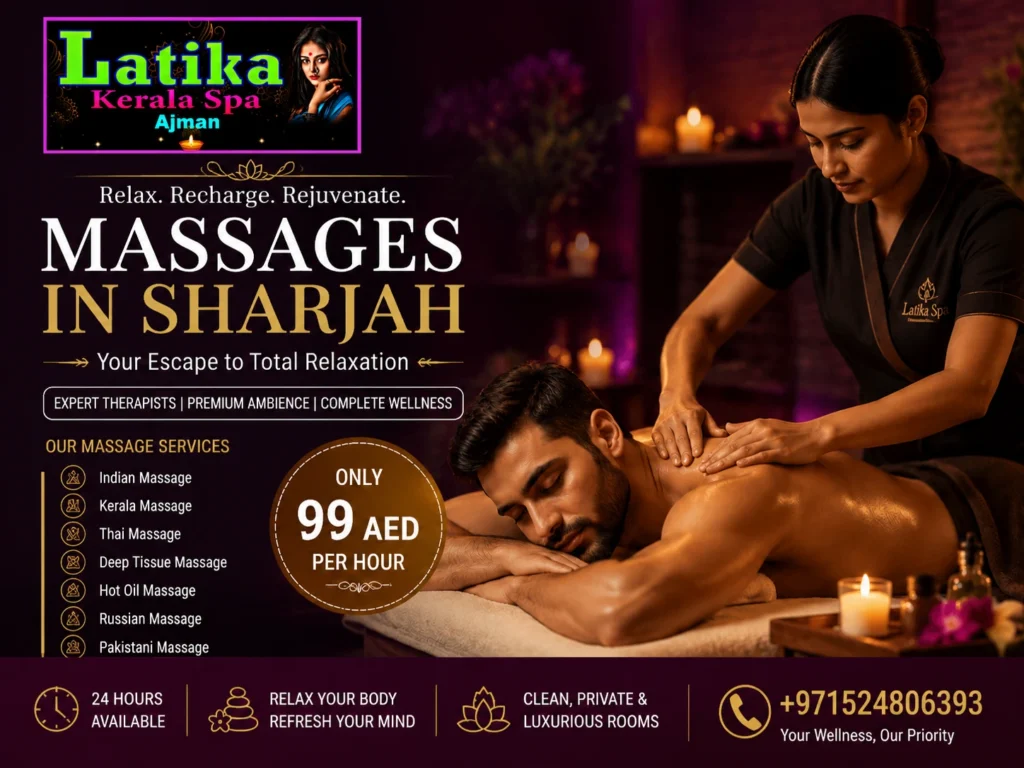
A friend of mine, an accountant who drives from Ajman to her office near Al Nahda every morning, once told me she’d stopped being able to check her blind spot without turning her whole torso. She’d blamed her car seat, then her mattress, then her phone habit. Turns out it was all three, stacked on top of each other, five days a week, for about a year and a half. That’s the thing about the kind of pain people get from this particular commute. It doesn’t announce itself. It just shows up one Tuesday as a knot behind the shoulder blade, and by the time you notice, it’s been building for months. This is exactly why so many people around here have started actively searching for massages in Sharjah — not for a spa day, but because the ache has become impossible to ignore.
I want to walk through what’s actually causing this pattern of pain, which massage styles genuinely address which problem, and how to tell a decent spa from one that’s just going through the motions.
Why This Specific Kind of Pain Keeps Showing Up
Ask a physiotherapist in the UAE and they’ll usually describe the same cluster of complaints from people who move between Ajman and Sharjah regularly. It’s rarely one injury. It’s more like four small habits compounding:
- Neck strain from looking slightly downward at phones and steering wheels for hours
- Lower back stiffness from sitting in a car seat that doesn’t actually support the lumbar spine
- Shoulders creeping up toward the ears without you noticing, especially during stressful calls
- Hips that barely move because the day is spent between a driver’s seat and an office chair
None of these sound serious on their own. Together, over a year, they add up to genuinely limited mobility — the kind you’d expect in someone twenty years older.
The Part Nobody Blames: Air Conditioning
Here’s something that gets overlooked constantly. Cold, dry air — which is basically unavoidable in Ajman for eight or nine months a year — causes blood vessels near the surface of the skin to narrow. Less blood flow to a muscle means slower recovery and more stiffness sitting in place longer than it should. It’s a small physiological detail, but it’s the reason therapists at massage Spa Ajman often ask new clients how many hours a day they spend directly under an AC vent before deciding on a treatment plan. It sounds like a strange question until you realize how much it actually matters.
Not All Massages Solve the Same Problem
This is where a lot of spa marketing falls apart — it treats every massage as interchangeable, like the only real variable is how relaxed you feel afterward. That’s not really true. Different techniques target different tissue problems.
When the Knot Won’t Move: Deep Tissue Massage
If there’s a spot that’s been tight for months and hasn’t responded to anything gentle, Deep Tissue Massage is usually the answer. It works slowly, layer by layer, using sustained pressure to break up adhesions that have hardened over time. It’s not always pleasant in the moment — some people describe it as “good pain” — but for genuinely chronic tightness, it tends to work faster than lighter techniques.
When You’re Cold All the Time: Hot Oil Massage
Given how much of the day is spent under AC here, Hot Oil Massage deserves more credit than it usually gets. The heat helps open up blood vessels and warm tissue that’s been sitting stiff for hours, which is often why it’s used before deeper, more intensive work rather than as a standalone treatment.
When It’s Not Just Muscles, It’s Joints: Thai Massage
Thai Massage blends assisted stretching with compression along specific lines of the body, and it’s particularly useful for people whose stiffness has crept into the joints, not just the soft tissue — a common issue for anyone who hasn’t properly stretched in longer than they’d like to admit.
When Circulation Is the Real Issue: Russian Massage
Russian Massage relies on rhythmic, structured strokes designed to support lymphatic drainage and reduce swelling. It tends to help people who notice puffiness in the legs or ankles after long stretches of sitting or standing without moving.
The Traditions That Do Double Duty: Indian, Pakistani, and Kerala Massage
South Asian massage traditions bring something Western techniques often miss — they treat the head and nervous system as part of the same problem as the muscles. Indian Massage frequently includes scalp work that can ease tension headaches, which show up a lot in people who stare at screens all day. Pakistani Massage styles tend to emphasize joint mobility, which suits anyone dealing with stiffness from sitting in the same posture for hours. Kerala Massage, built on Ayurvedic principles, uses warm herbal oils and steady, rhythmic strokes meant to calm the nervous system alongside the muscles — genuinely useful when the pain is tangled up with poor sleep or ongoing stress.
How to Actually Pick the Right One
A therapist who’s any good won’t just ask “what massage do you want?” and leave it there. They’ll ask about your daily routine, any old injuries, how you’re sleeping, and exactly where the discomfort sits. At Latika Spa Ajman, that short conversation happens before any oil touches skin — checking for injuries, blood pressure concerns, or spots that need lighter pressure — because using the wrong technique on the wrong body can make things worse, not better.
A few questions worth asking before booking anywhere:
- Can the pressure be adjusted mid-session if it’s too much?
- Are the therapists actually trained in the specific style you’re booking, or just “massage” in general?
- What’s the hygiene process for linens and tools between clients?
- Is there any kind of consultation, or do you just get handed a robe?
If a spa can’t give you a straight answer to these, that tells you something.
Hygiene Isn’t Optional Here
Given the climate and the shared nature of spa spaces, hygiene standards matter more than most people think about until something goes wrong. Places worth trusting — spa massage sharjah included — use fresh linens for every client, sanitize tools between sessions, and keep treatment rooms properly ventilated. If you’ve had recent surgery, are pregnant, have a skin condition, or deal with high blood pressure, mention it before the session starts. A therapist who knows what they’re doing will adjust pressure and technique accordingly, and a spa worth its reputation won’t push you into something that isn’t right for your situation.
Treat It Like Maintenance, Not a Last Resort
The people who get the most out of massage therapy generally aren’t the ones who show up once every six months in genuine agony. They’re the ones who book every three or four weeks as basic upkeep, the same way they’d get a car serviced before something actually breaks. Pair that with small daily habits — standing up once an hour, stretching the neck during long calls, fixing the lumbar support in the car — and the benefits tend to stack.
If you’ve spent the last few months quietly ignoring a stiff neck or a lower back that only complains after the drive home, the fix rarely needs to be dramatic. It starts with figuring out what kind of tension you’re actually carrying, matching it to the right technique, and finding a spa in Sharjah or Ajman that takes the consultation as seriously as the massage itself.
That’s more or less the approach Latika Spa Ajman takes with new clients — less about upselling a package, more about working out what your body actually needs that particular week, whether that’s a warming Hot Oil Massage ahead of deeper work, or a Kerala-style session to settle a stressed nervous system along with sore muscles.
FAQs
1. How often should I get a massage if I’m commuting between Ajman and Sharjah daily? Every three to four weeks works well for general upkeep. If there’s active pain or unusually high stress, weekly sessions for a short stretch can help before easing back to a maintenance rhythm.
2. Does Deep Tissue Massage hurt? It can feel intense, especially over old, stubborn knots, but it shouldn’t be sharply painful. A therapist worth their license will check in on pressure as they go.
3. Can I still get a massage if I have high blood pressure? Often yes, but say so before the session begins. Therapists may need to adjust pressure, positioning, or skip certain techniques depending on the specifics.
4. What’s the actual difference between Kerala Massage and Hot Oil Massage? Kerala Massage comes from Ayurvedic tradition and uses warm herbal oils with rhythmic strokes aimed at calming the nervous system, not just loosening muscles. Hot Oil Massage is more general — it uses warmth mainly to improve circulation and prep the body for deeper work.
5. Are massage spas around Sharjah and Ajman actually hygienic? The reputable ones are — fresh linens per client, sanitized tools, clean and ventilated rooms. It’s completely reasonable to ask a spa directly about this before booking.
6. Which massage helps most with neck and shoulder tension from screen time? Indian Massage with scalp and shoulder focus, or Deep Tissue Massage for more stubborn knots, are usually the better starting points for screen-related tension.