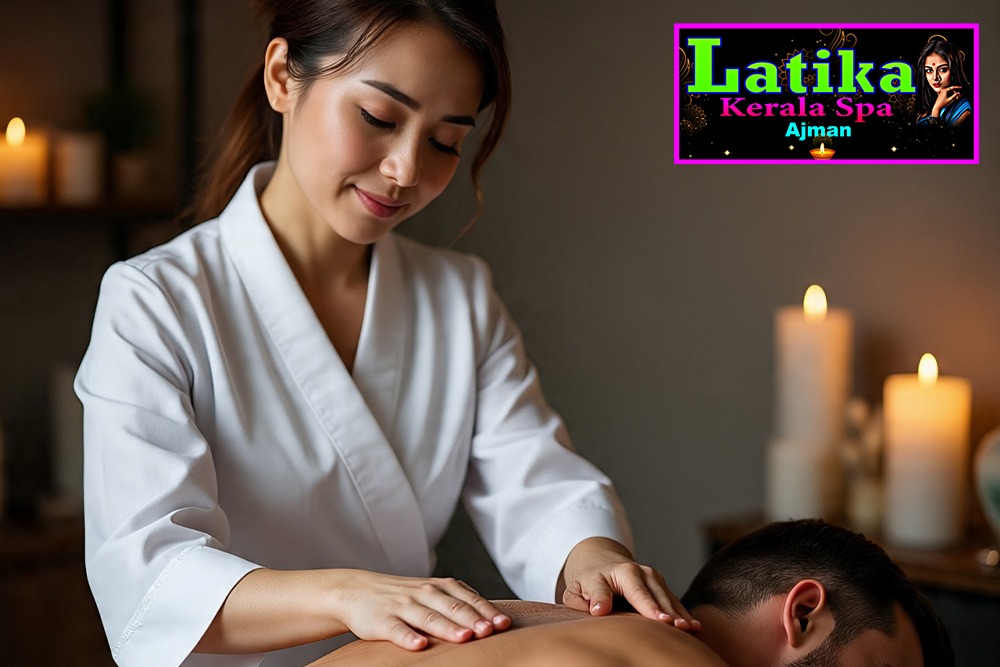
If you live in Ajman and work in Sharjah, or you do the reverse trip every evening, you already know the routine without me explaining it. Out the door early, thirty to fifty minutes in the car or on a bus, then a full day at a desk, then the same drive back. Your spine is basically doing overtime it never signed up for. So it’s not really surprising that a lot of people typing “spa in Sharjah” into Google aren’t after a spa day. They just want their neck to stop feeling like it’s stuck in one position.
Most articles on this topic stop at “massage helps with stress,” which, sure, it does. But nobody explains why it’s your neck and lower back specifically that end up wrecked, or which type of massage is actually built for that problem instead of just feeling good for sixty minutes and wearing off by Wednesday.
Why the Commute Hurts More Than You’d Expect
The stretch between Ajman and Sharjah isn’t long on paper. But sit through the crawl near Al Jurf or Muwaileh a few times a week and you’ll notice your shoulders creep up toward your ears without you telling them to. Jaw tightens. Lower back rounds into the seat and just… stays there. Your body holds this low-key brace the entire drive, and it doesn’t clock off the second you park.
Add a desk job where the laptop’s too low and the phone spends half the day wedged between your ear and shoulder, and you get a pattern that’s honestly pretty predictable if you’ve seen enough of it: tight traps, a neck that won’t turn all the way to one side anymore, and a lower back that’s fine in the morning and aching by six.
Why It’s Worth Fixing Early
Here’s the part people underestimate. Muscle tightness doesn’t just sit quietly where it started. It pulls on the joints nearby, which changes how you move without you noticing, which then loads up some other muscle that’s now doing extra work to compensate. That’s usually the actual story behind how “my neck’s a bit stiff” turns into recurring headaches or how a manageable backache becomes something that flares up every time you pick up a grocery bag the wrong way.
So What Actually Helps
“Just get a massage” isn’t really useful advice on its own, because not all massage is solving the same problem.
Deep Tissue Massage tends to be the right call if your shoulders and upper back have been locked up for months. It works into the deeper muscle layers rather than staying on the surface, which is often exactly what’s needed after all that tense posture. Done properly it should feel firm and focused — not something that leaves bruises behind.
Kerala Massage, with its warm herbal oils and long, rhythmic strokes, is worth considering if the issue is less “one specific knot” and more general exhaustion and sluggish circulation. It’s gentler than deep tissue but still doing real work, and a lot of people notice better sleep afterward — useful when you’re up early for that commute anyway.
Hot Oil Massage earns its place especially during Ajman’s drier stretches, when muscles and skin both feel tighter than usual. The warmth loosens the surface tension first, which is why some therapists actually use it as a lead-in before deeper work rather than a standalone treatment.
Thai Massage is a different animal entirely — it’s assisted stretching, not pure pressure. If your real problem is restricted movement (a neck that won’t fully turn, hips that feel locked after sitting all day) Thai techniques restore range of motion in a way pressure-based massage just doesn’t touch.
Russian Massage, with its structured, methodical strokes, tends to suit people who want something closer to clinical bodywork rather than a purely relaxing hour — often paired with general muscular recovery.
Indian Massage and Pakistani Massage, both drawing on long-running hands-on traditions, get chosen a lot specifically for head, neck, and shoulder tension. Which, again, is exactly the zone commuters complain about.
None of these wins outright. It genuinely depends on whether you’re dealing with tightness, restricted movement, poor circulation, or plain fatigue — and that’s the actual reason a real conversation before the session matters more than whatever’s printed on the treatment menu.
What a Decent Therapist Actually Checks For
This is where you can tell the difference pretty fast. A therapist working off a script asks what you want and starts the timer. Someone with more experience asks a few things first — where it actually hurts, whether it’s sharp or dull, what makes it worse, any recent injuries — before deciding on pressure and technique. At Latika Spa Ajman, that short check-in happens before every session, partly because it makes the massage more effective, and honestly, partly because skipping it isn’t safe.
Safety gets glossed over in a lot of spa marketing, so a few things worth actually checking wherever you go:
- Therapists should ask about existing injuries, recent surgeries, or things like high blood pressure before diving into deep pressure work.
- Fresh linens and sanitized tools per client. Not a nice-to-have, a baseline.
- Products should be disclosed if you’ve got sensitive skin.
- Pregnant clients need to mention it upfront — pressure and positioning change completely.
If a place skips straight to the table without asking any of this, take that as a signal, not a good sign of efficiency.
How Often Is Actually Worth It
One session isn’t undoing six months of commute tension, and you don’t need to go weekly either. For chronic tightness, something like every two to three weeks tends to work at first, tapering to monthly once things settle. What matters more than the calendar is pairing it with tiny daily habits — adjusting your headrest, a two-minute stretch at the desk, switching which hand grips the wheel occasionally so one side isn’t doing all the work.
Making It Part of an Actual Routine
Honestly, no massage undoes a posture problem you repeat for eight hours a day, no matter how good the therapist is. Think of it less as a fix and more as a reset button — it clears the accumulated tension so you’re not starting Monday already behind. People who treat their massage spa Sharjah visits this way, as maintenance rather than a last resort when the pain gets loud, tend to see results that actually last, instead of the same ache showing up again a week later.
If you’re new to this, it helps to jot down when the tightness shows up — after long drives, after certain meetings, after sleeping a certain way. That small pattern is genuinely useful for a therapist to know, and it’s the difference between a generic relaxing hour and something closer to targeted care.
If you’re comparing options for massages in Sharjah, look for somewhere that actually treats that first conversation seriously instead of rushing you onto the table. That’s really the biggest gap between a massage that feels nice for an hour and one that changes how your neck and back feel a week from now.
There’s a reason so many people on the Ajman commute keep going back to the same spot once they find a therapist who actually listens — it stops being an occasional treat and starts feeling like part of just taking care of yourself. That’s the approach the team at Latika Spa Ajman tries to bring to every spa massage Sharjah appointment: treating the session as a response to what your body’s dealing with that week, not a fixed item off a menu. Small shift in mindset, but if you’re spending two hours a day in traffic, it adds up to a real difference.
Frequently Asked Questions
1. How do I know if I need Deep Tissue or something gentler like Kerala Massage? If you’ve got specific tight spots or chronic tension in one area — shoulders, upper back — Deep Tissue usually does more. If it’s more general fatigue or poor sleep without one obvious hot spot, Kerala Massage’s gentler rhythm tends to suit better. A quick chat with the therapist before you start should sort out which one fits.
2. Is soreness after a massage normal? A bit of soreness for a day, especially post-Deep Tissue, is pretty common and usually fades on its own. Sharp pain, bruising, or soreness that gets worse over several days isn’t normal — worth flagging to your therapist or a doctor.
3. How often should commuters actually get a massage? Every two to three weeks works well to start for chronic tension, dropping to monthly once things improve. Frequency matters less than pairing it with small posture changes during the day.
4. Can I get a massage with high blood pressure or a recent injury? Usually yes, but always mention it before the session so the therapist can adjust pressure and positioning. Any responsible spa will ask this anyway.
5. What’s the actual difference between Thai Massage and Deep Tissue? Thai Massage uses assisted stretching to improve flexibility and movement; Deep Tissue uses sustained pressure to release tight muscle layers. Different tools for different problems — one’s about restricted movement, the other’s about tightness.
6. Do hygiene standards really differ that much between spas? Yes, more than people expect. Fresh linens per client, sanitized equipment, disclosed products — none of that is universal. Perfectly reasonable to ask about it before you book, especially for oil-based treatments like Hot Oil Massage.