Ask most people in Ajman why their shoulders feel like concrete by Thursday, and they’ll blame their desk chair or their phone. Few think to blame the air itself. But if you’ve lived here through a full summer, you already know: this isn’t ordinary heat. It’s the kind of humid, heavy air that makes a five-minute walk to your car feel like a workout, and it does something to your body that most people never connect to the stiffness they carry around all day — which is exactly why so many residents end up searching for a reliable massage center in Ajman without fully understanding why their body needs one in the first place.
That connection between climate and chronic tension is the missing piece in most wellness advice you’ll find online, and it’s worth understanding properly before you decide what to do about it. This isn’t a sales pitch for a spa day. It’s a practical look at why your body reacts the way it does here, and what genuinely helps versus what’s just marketing.
How Ajman’s Climate Actually Affects Your Muscles
Humidity doesn’t just make you sweat more. It changes how your body regulates temperature, and that regulation process pulls resources away from other systems — including the ones responsible for muscle recovery and circulation.
When the air is thick with moisture, sweat evaporates more slowly. Your body compensates by working harder to cool itself, which means blood flow gets redirected toward the skin’s surface and away from deeper muscle tissue. Over weeks and months of exposure — especially if you’re moving between air-conditioned interiors and outdoor humidity multiple times a day — that constant temperature-regulation demand leaves muscles under-supplied with the oxygen and nutrients they need to repair themselves after a normal day of sitting, driving, or standing.
The AC-to-Outdoors Cycle Nobody Talks About
Ajman residents live a strange thermal life. You leave a chilled office or mall, step into 40-degree humidity, get into a hot car, then blast the AC again. Your muscles — particularly around the neck, shoulders, and lower back — respond to these rapid shifts by tightening involuntarily. It’s a protective reflex, not unlike shivering, except it happens quietly and repeatedly, all day, every day, for months at a time.
This is different from the kind of muscle fatigue you’d get from a workout. It’s low-grade, constant, and easy to dismiss because no single day feels dramatic. It just accumulates.
Why This Matters More If You Work a Desk Job
If your work in Ajman Rashidiya, Al Nuaimiya, or the Corniche area involves long hours at a screen, you’re stacking postural strain on top of climate strain. The neck-forward posture common to desk work already shortens the muscles at the base of your skull and across your upper back. Add humidity-driven circulation issues, and you get the kind of persistent tightness that painkillers barely touch and stretching alone doesn’t fully resolve.
Physiotherapists often point out that muscle tissue needs both movement and manual pressure to fully release built-up tension — stretching alone lengthens a muscle temporarily, but it doesn’t necessarily improve blood flow to the deeper fibers where chronic knots form.
What Actually Helps: A Realistic Breakdown
Not every recovery method suits every kind of tension, and it’s worth understanding the differences rather than assuming one approach fits all.
Deep Tissue Massage for Chronic Knots
If you’ve been carrying tension for months, a Deep Tissue Massage targets the deeper layers of muscle and connective tissue rather than just the surface. It’s more intense than a relaxation-focused session and works best for people dealing with long-standing stiffness in the shoulders, lower back, or neck — the areas most affected by the AC-to-heat cycle described earlier.
Hot Oil Massage for Circulation
Given how humidity disrupts blood flow to muscle tissue, a Hot Oil Massage can be particularly useful. The warmth helps dilate blood vessels and improve circulation, which is exactly the mechanism that gets suppressed when your body is busy regulating temperature. It’s also gentler than deep tissue work, making it a good option if your tension is more diffuse than localized.
Thai Massage for Postural Strain
For people whose stiffness comes primarily from sitting — whether at a desk or during long commutes across Ajman — Thai Massage combines stretching with pressure-point work in a way that addresses both muscle tightness and joint mobility. It’s especially helpful for hips and lower back, areas that suffer from prolonged sitting.
Kerala Massage for Deep Relaxation With Therapeutic Roots
Kerala Massage draws on traditional Ayurvedic techniques and uses warm herbal oils applied with rhythmic strokes. It’s less about intense pressure and more about restoring balance to the nervous system, which matters if your tension has a stress component alongside the physical one — common for people juggling long work hours in Ajman’s business districts.
Indian and Pakistani Massage for Everyday Tension Relief
Both Indian Massage and Pakistani Massage traditions emphasize firm, rhythmic pressure combined with joint mobilization, often passed down through generations of trained practitioners. These styles tend to work well for people who want a balance between relaxation and genuine muscular relief without the intensity of deep tissue work.
Russian Massage for Sports-Related or Structural Tension
If your tightness comes from gym sessions, football on weekends, or physical labor, Russian Massage techniques focus on manipulating muscle and connective tissue with a methodical, therapeutic approach originally developed for athletes and rehabilitation. It’s worth considering if your discomfort is more mechanical than climate-related.
What a Good Massage Center in Ajman Should Actually Offer
Not all massage services are created equal, and it’s worth knowing what separates a genuinely therapeutic experience from a purely cosmetic one.
Trained, Licensed Therapists
Ask whether therapists are certified in the specific technique you’re booking. A therapist trained in Kerala Massage should understand Ayurvedic principles, not just generic strokes. This matters because improper technique — especially in deep tissue or Thai massage — can aggravate rather than relieve tension if applied incorrectly.
Visible Hygiene Standards
In a post-pandemic world, hygiene isn’t optional. A reputable massage center in Ajman should have clean linens changed between every client, sanitized equipment, and clearly visible cleanliness protocols. Before booking with any Ajman massage center, it’s worth asking directly about these standards rather than assuming they’re in place.
Honest Consultation Before Treatment
A good therapist asks about your specific pain points, any injuries, and your medical history before starting — not just which massage type sounds nice. This is a basic safety measure, particularly for deep tissue and hot oil sessions, which aren’t recommended for people with certain circulatory conditions, recent injuries, or during specific stages of pregnancy without medical clearance.
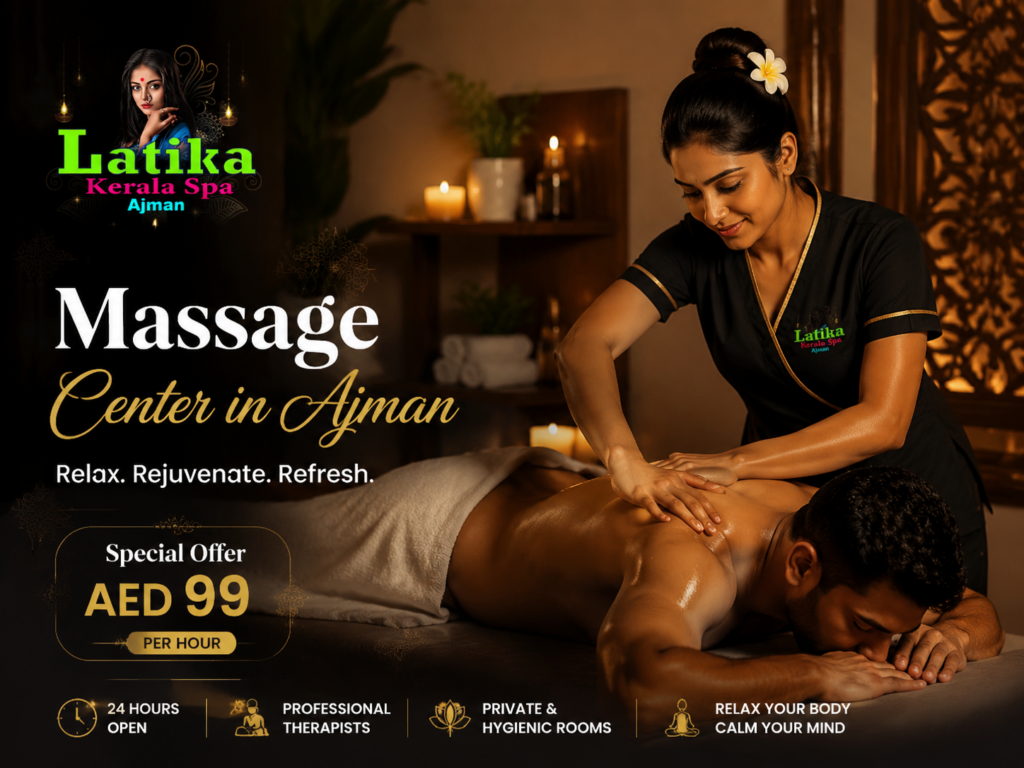
At Latika Spa Ajman, this kind of consultation-first approach is standard practice, largely because climate-related tension shows up differently in every client — someone commuting from Ajman Rashidiya daily has different needs than someone working a stationary desk job downtown.
Practical Tips Beyond the Massage Table
Massage helps, but it works best alongside a few simple habits:
- Hydrate consistently, not just when thirsty — humidity increases fluid loss even when you don’t feel sweaty.
- Stretch briefly every 90 minutes if you’re desk-bound, focusing on neck rotations and shoulder rolls.
- Limit abrupt AC-to-heat transitions where possible, or give your body a few minutes to adjust rather than moving directly between extremes.
- Prioritize sleep posture — a pillow that keeps your neck neutral matters more in humid climates because muscles are already under added strain.
Finding the Right Fit Near You
If you’re searching for a reliable Ajman massage center, proximity matters less than technique and hygiene standards — though for residents around Rashidiya, a massage center Ajman Rashidiya location that’s easy to reach after work makes consistency far easier to maintain. Recovery from chronic tension isn’t a one-time fix; it’s a pattern of care over weeks, and that’s easier to sustain when the location fits your routine.
For those exploring massage in Ajman for the first time, it’s worth starting with a consultation rather than booking blind. A conversation about your specific tension patterns — desk-related, climate-related, or activity-related — will point you toward the right technique far more reliably than guessing from a menu.
Latika Spa Ajman has built its approach around exactly this kind of tailored assessment, recognizing that what works for someone dealing with humidity-driven circulation issues won’t necessarily suit someone recovering from a sports strain. That distinction, more than any single technique, is what separates genuine therapeutic relief from a generic rubdown.
Frequently Asked Questions
1. Why does humidity cause muscle stiffness even without physical activity? Humidity forces your body to work harder at temperature regulation, which redirects blood flow away from muscle tissue and slows the natural recovery process, leading to gradual stiffness even on low-activity days.
2. Which massage type is best for desk-related neck and shoulder pain?
Deep Tissue Massage and Thai Massage are both effective, with Thai Massage additionally addressing hip and back mobility from prolonged sitting.
3. Is Hot Oil Massage safe for people with sensitive skin?
Generally yes, but it’s important to inform your therapist about any skin conditions or allergies beforehand so they can select an appropriate oil.
4. How often should I get a massage to manage chronic tension?
For ongoing climate or posture-related tension, many therapists recommend sessions every two to three weeks, adjusted based on how quickly tension rebuilds.
5. What’s the difference between Kerala massage and Indian massage?
Kerala massage is rooted specifically in Ayurvedic tradition, using warm herbal oils and rhythmic strokes for balance and relaxation, while Indian Massage encompasses a broader range of regional techniques focused on firm, therapeutic pressure.
6. Can massage therapy replace physiotherapy for chronic pain?
No — massage therapy supports circulation and muscle relief, but persistent or severe pain should be evaluated by a physiotherapist or doctor to rule out underlying structural issues.