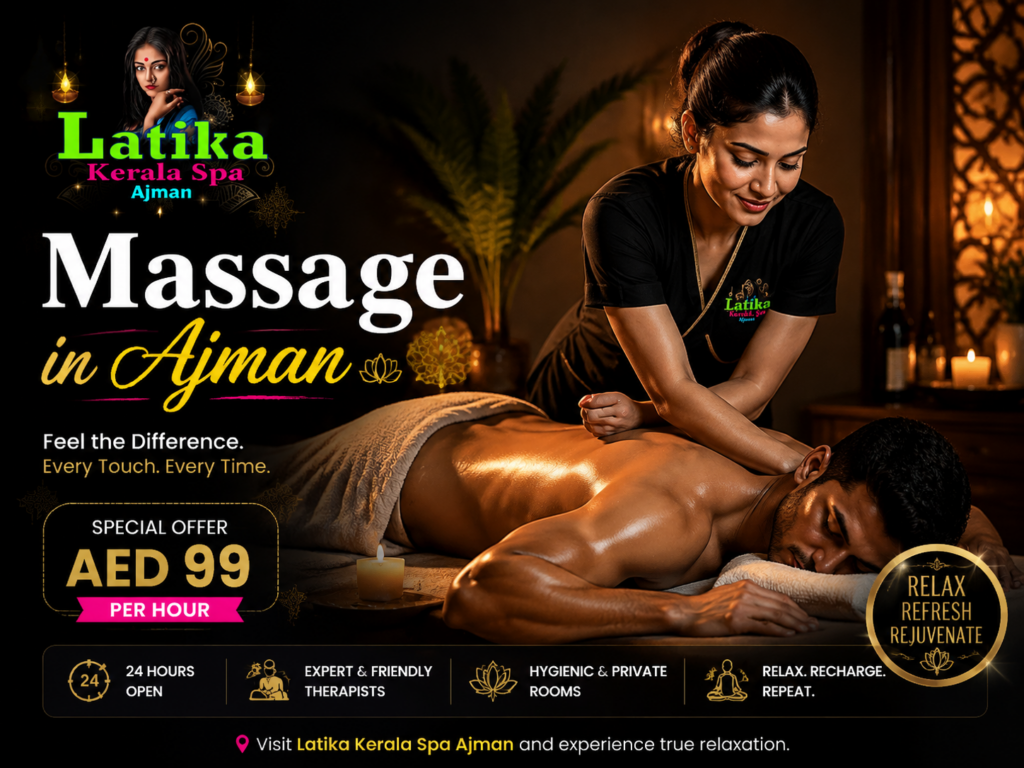
Ask any physiotherapist in the Northern Emirates what they see the most, and the answer isn’t sports injuries or gym strain. It’s the “Sheikh Zayed slouch” — that particular blend of tight hips, rounded shoulders, and a stiff lower back that comes from spending 40 to 90 minutes a day sitting in a car seat, followed by another eight hours in an office chair. Ajman’s growing commuter population, many of whom travel in from Sharjah or drive into Dubai for work, is dealing with a very specific kind of physical wear that generic wellness advice doesn’t quite address. If you’ve been searching for a massage in Ajman that actually targets this problem rather than just offering a generic rubdown, it helps to first understand what’s happening to your body — and then what kind of bodywork genuinely reverses it. Most people typing “massage ajman” into Google aren’t looking for a generic spa day; they’re looking for relief from something specific, even if they can’t quite name it yet. That’s the gap Ajman Massage providers who actually understand posture and daily habits are best placed to fill.
This isn’t a listicle about “5 benefits of massage.” It’s a closer look at a very local problem, and the specific techniques that help.
The Anatomy of an Ajman Commute
Driving is deceptively hard on the body. Your right leg is locked in a hovering position over the pedals, your neck is angled slightly to check mirrors, and your lower back is compressed against a seat that rarely offers real support. Do this daily, in Ajman’s traffic patterns along Sheikh Mohammed Bin Zayed Road or the Ajman–Sharjah corridor, and the muscles around your hips and spine start to adapt — not in a good way.
What Happens to the Hip Flexors
The hip flexors (the muscles at the front of your hip that lift your knee) shorten when you sit for long periods. Shortened hip flexors pull on the lower spine, which is a major reason so many people in the UAE report chronic lower back tightness despite not doing any physically demanding work.
What Happens to the Neck and Shoulders
Air conditioning vents blasting cold air directly onto the neck — a very Gulf-specific habit — combined with a forward head posture from looking at a phone or a lower dashboard screen, creates a pattern of tension that sits right at the base of the skull. This is often the source of tension headaches that people assume are caused by dehydration or heat.
Why Generic Relaxation Doesn’t Solve This
A lot of spa marketing frames massage purely as a treat — something you do after a stressful week to unwind. That’s not wrong, but it misses the point for anyone dealing with commute-related stiffness. Relaxation alone doesn’t lengthen a shortened hip flexor or release a knot that’s been building in the trapezius for six months. That requires targeted pressure, specific stretching, and therapists who understand musculoskeletal patterns rather than just performing a routine sequence.
At Latika Spa Ajman, this distinction matters. A therapist who has been trained to recognize commuter-pattern tightness will spend more time on the hip flexors and glutes than a generic session might, because that’s where the actual restriction usually lives — even if the client’s main complaint is “my lower back hurts.”
Which Massage Techniques Actually Help
Not all massage styles are built for the same problem. Here’s how the main techniques differ when it comes to commute-related stiffness.
Deep Tissue Massage for Structural Tightness
If your hip flexors and lower back are genuinely restricted — not just tired, but tight to the touch — Deep Tissue Massage is usually the most effective starting point. It works through the layers of muscle rather than just the surface, which is necessary when tension has been building for months rather than days.
Thai Massage for Mobility
Thai Massage incorporates assisted stretching, which is particularly useful for hip flexors and hamstrings that have shortened from prolonged sitting. Unlike a purely pressure-based massage, Thai techniques move your joints through their range of motion, which helps restore mobility that driving and desk work slowly take away.
Kerala Massage for Circulation and Recovery
Kerala Massage, rooted in traditional Ayurvedic practice, uses warm herbal oils and rhythmic strokes that support circulation. For people who deal with heaviness in the legs from long periods of sitting — a common complaint among Ajman’s commuting professionals — this style is often more restorative than a purely mechanical deep tissue session.
Hot Oil Massage for Muscle Warmth Before Deeper Work
A Hot Oil Massage isn’t just about comfort. Warming the muscle tissue before deeper work makes the muscle fibers more pliable, which is why many therapists use a hot oil approach as a preparation phase before targeting stubborn knots — a sequence that reduces discomfort during deeper pressure work.
Indian and Pakistani Massage for Full-Body Tension Release
Indian Massage and Pakistani Massage techniques often combine kneading, compression, and joint mobilization in a way that addresses full-body tension rather than isolating one area. For someone whose stiffness has spread from the lower back into the shoulders and neck — a common progression after months of poor sitting posture — this whole-body approach can be more effective than a localized treatment.
Russian Massage for Deep, Methodical Pressure
Russian Massage is known for its methodical, structured approach to deep pressure, often used to address chronic muscular tension that hasn’t responded to lighter techniques. It’s worth discussing with your therapist if previous massage sessions haven’t resolved persistent tightness.
Hygiene, Safety, and What a Professional Spa Should Look Like
Before booking any Ajman spa massage, it’s worth knowing what separates a professional setup from an average one. Not every spa in Ajman follows the same standards, so it’s worth asking a few questions before you commit to a session:
Clean, Sealed Oil Containers
Oils should be dispensed from sealed or pump containers, not open jars that multiple hands have touched throughout the day.
Fresh Linens for Every Client
Towels and sheets should be changed and laundered between every single session — not just when visibly soiled.
Licensed, Trained Therapists
Therapists should be able to explain which technique they’re using and why, based on your specific complaint, rather than defaulting to one routine for every client.
Pre-Session Health Screening
A responsible therapist will ask about existing injuries, recent surgeries, pregnancy, or conditions like high blood pressure before applying deep pressure techniques.
If a spa can’t clearly answer questions about their hygiene protocol, that’s a signal to look elsewhere — regardless of how nice the reception area looks.
A Simple Way to Think About Frequency
Massage isn’t a one-time fix for a repetitive strain problem. If your job and commute haven’t changed, the tightness will return. As a general guideline:
- Mild, occasional stiffness: once a month is often enough to keep things in check
- Regular tension or mild pain: every two to three weeks tends to produce noticeable, lasting change
- Chronic pain or restricted mobility: weekly sessions for four to six weeks, combined with basic stretching at home, usually shows the clearest results
This is also where working with the same therapist over multiple visits pays off — they start to remember which areas need more attention and can adjust technique accordingly, something that’s harder to replicate if you switch providers every time.
What You Can Do Between Sessions
A massage helps undo damage, but a few small habits slow down how quickly it returns:
- Adjust your car seat so your knees sit slightly lower than your hips, which reduces hip flexor shortening
- Take a two-minute walk every hour if you’re at a desk — even just to the pantry and back
- Point air conditioning vents away from your neck and shoulders during long drives
- Stretch your hip flexors with a simple lunge stretch for 30 seconds per side before bed
None of these replace professional bodywork, but they extend how long the benefits of a session actually last.
Finding the Right Fit for You
Not every technique suits everybody. Someone with high blood pressure may need to avoid very deep pressure work, while someone with significant joint stiffness might benefit more from Thai-style stretching than from a purely oil-based massage. A short conversation with your therapist before the session begins — about what hurts, what your daily routine looks like, and what you’ve tried before — makes a bigger difference to the outcome than the specific spa you choose.
That conversation is exactly where a place like Latika Spa Ajman tends to stand out: rather than offering a single fixed package, therapists take the time to ask what’s actually going on in your body before deciding which of the seven techniques above fits best. For anyone in Ajman dealing with the specific, cumulative wear of driving and desk work, that kind of tailored approach — more than any single technique — is what makes the difference between temporary relief and a genuine long-term fix. Latika Spa Ajman’s approach to combining assessment with targeted technique is part of why regular commuters keep coming back rather than treating it as a once-a-year indulgence.
FAQ
1. How often should I get a massage in Ajman if I commute daily? For regular commuters dealing with mild to moderate stiffness, every two to three weeks tends to be effective. If pain is chronic, weekly sessions for four to six weeks combined with stretching at home usually produce better, longer-lasting results.
2. Which massage type is best for lower back pain from sitting? Deep Tissue Massage is typically most effective for structural tightness in the lower back and hip flexors, often followed or preceded by Hot Oil Massage to warm the tissue and reduce discomfort during deeper work.
3. Is Thai massage painful? Thai Massage involves assisted stretching and can feel intense in tight areas, but it shouldn’t be sharply painful. A qualified therapist will adjust pressure and stretch depth based on your feedback throughout the session.
4. Can massage really fix posture problems from driving? Massage alone won’t permanently correct posture, but it can release the muscular tightness that causes poor posture in the first place. Combined with small daily habits like proper seat positioning and regular movement breaks, the results are far more lasting.
5. What should I check before booking a spa in Ajman? Look for clear hygiene protocols (sealed oils, fresh linens per client), licensed therapists who ask about your health history, and a willingness to explain which technique suits your specific complaint rather than a one-size-fits-all routine.
6. Is Kerala massage different from a regular oil massage? Yes. Kerala Massage draws on traditional Ayurvedic principles, using specific herbal oils and rhythmic strokes aimed at supporting circulation and recovery, rather than just providing general relaxation.
The tightness that builds up from Ajman’s daily commute and desk-bound work culture isn’t something that resolves on its own, and it rarely responds to a single “treat yourself” spa visit. It takes an understanding of what’s actually causing the restriction, and a therapist willing to adjust technique to match it. That’s the kind of session worth seeking out — and it’s the approach Latika Spa Ajman has built its reputation on, one appointment at a time.