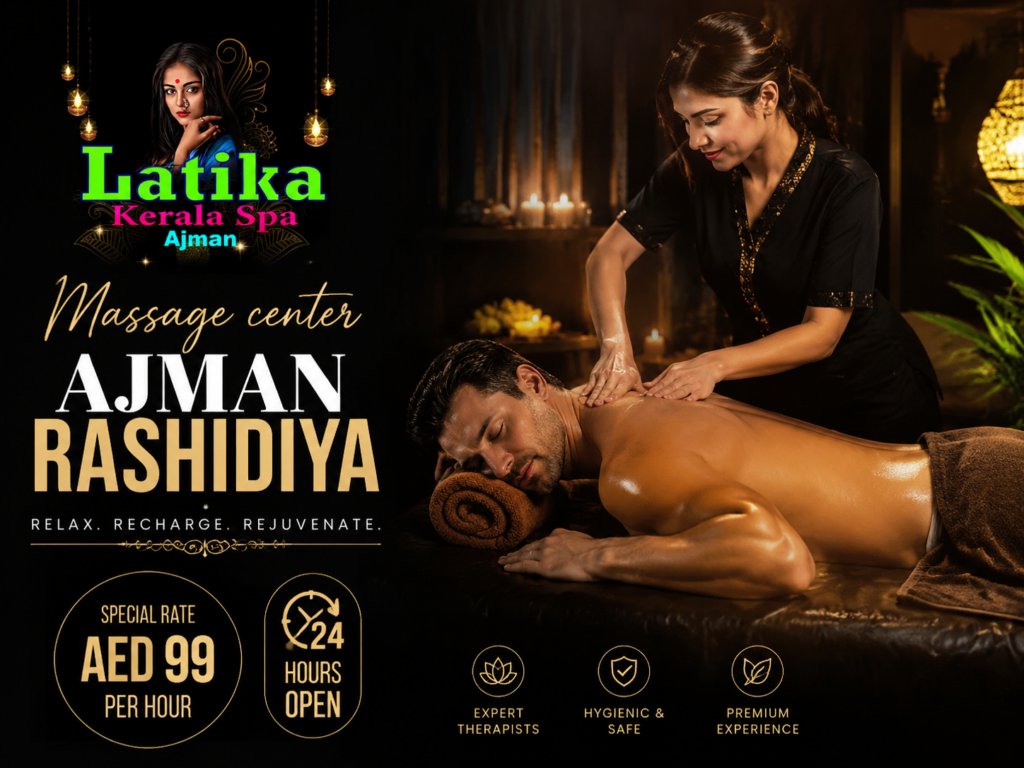
Ask ten people in Rashidiya how their shoulders feel by Thursday evening, and at least seven will wince before they answer. It’s not dramatic — just the quiet accumulation of sitting through Sheikh Ammar Road traffic, hunching over laptops in over-cooled offices, and skipping stretches because the day never really slows down. Most people don’t think about visiting a massage center in Ajman Rashidiya until the pain has already settled into their neck or lower back. By then, they’re not looking for relaxation — they’re looking for relief, and they usually don’t know which type of massage will actually help.
That’s the gap this guide tries to close. Instead of listing generic benefits of massage therapy, we’re going to walk through how to match specific everyday problems — desk posture, gym soreness, poor sleep, dry winter skin from AC exposure — to the right treatment. Along the way, we’ll also cover what a responsible, well-run clinic should tell you before you even lie down on the table, something the team at Latika Spa Ajman takes seriously with every new client.
Why Ajman’s Lifestyle Is Quietly Wrecking Your Back and Shoulders
The Rashidiya Commute Effect
Rashidiya sits close enough to Sharjah and Dubai that a huge number of residents spend an hour or more each day behind the wheel. That kind of seated, forward-leaning posture — one hand on the wheel, shoulders creeping toward the ears in heavy traffic — tightens the hip flexors and upper trapezius muscles without you noticing. It’s a slow-motion injury pattern, not a dramatic one, which is exactly why people ignore it until it becomes chronic.
Desk Work, AC Offices, and Tight Shoulders
Add hours of desk work in air-conditioned offices, and you get a second layer of tension. Cold air causes muscles to contract slightly to conserve heat, which is part of why so many office workers in Ajman describe a persistent “cold, stiff” feeling between the shoulder blades by mid-afternoon. This isn’t something a five-minute stretch fixes — it needs targeted manual therapy.
Not All Massages Solve the Same Problem (A Practical Breakdown)
This is where most spa blogs stop at “massage reduces stress.” That’s true, but it’s not useful when you’re trying to decide what to actually book. Here’s a more honest breakdown.
Deep Tissue Massage — For Chronic Knots and Postural Pain
If you can point to a specific spot — the base of your neck, between your shoulder blades, or your lower back — and say “it’s always tight right there,” you’re likely dealing with adhered muscle fibers from repetitive posture. Deep Tissue Massage uses slow, firm pressure to work through these layers. It’s not always comfortable, but a trained therapist will check in with you about pressure levels throughout, not just push as hard as possible.
Thai Massage — For Stiffness and Limited Mobility
If your problem is less “sharp pain” and more “I feel stiff and my range of motion is shrinking,” Thai Massage is often the better fit. It combines stretching with pressure-point work, which is particularly useful for people whose joints feel locked up from long hours of sitting.
Hot Oil Massage — For Dry Skin, Poor Circulation, and Sleep Issues
Ajman’s air conditioning is a double-edged sword — comfortable in summer, but brutal on skin hydration and circulation year-round. A Hot Oil Massage does two things at once: the warmth improves blood flow to tired muscles, and the oil addresses the dryness that AC exposure causes. Many clients also report it helps them sleep better that night, likely due to the parasympathetic (rest-and-digest) response triggered by sustained warmth and slow strokes.
Kerala Massage — For Deep Relaxation and Traditional Wellness
Rooted in Ayurvedic principles, Kerala Massage uses warm herbal oils and rhythmic strokes designed to balance the body rather than just target one sore spot. It’s a good option for people dealing with generalized fatigue rather than one specific injury — the kind of tiredness that isn’t about a single muscle but about the nervous system needing to downshift.
Russian Massage — For Muscle Recovery After Exercise
If you train regularly — whether that’s padel, gym sessions, or swimming — Russian Massage is built for recovery. It typically uses rhythmic, percussive, and kneading techniques to flush out metabolic waste from muscles and reduce soreness after intense activity, without the deep, sometimes uncomfortable pressure of deep tissue work.
Indian and Pakistani Massage — For Head, Neck, and Scalp Tension
Screen time doesn’t just affect your back — it affects your head and neck too. Indian Massage and Pakistani Massage traditions often place heavy emphasis on head, neck, and scalp work, which can relieve tension headaches that many desk workers mistake for migraines when they’re actually muscular in origin.
How to Choose a Massage Center in Ajman Rashidiya Without Guessing
Ask About Therapist Training
A good therapist should be able to explain, in plain language, why they’re recommending one massage type over another for your specific complaint. If the answer is vague or every client gets the same treatment regardless of what they describe, that’s a sign the center isn’t really assessing individual needs.
Check Hygiene Standards
What Clean Towels and Sanitized Tools Actually Tell You
This sounds basic, but it matters more than most people realize. Fresh linens for every client, visibly sanitized surfaces, and therapists who wash their hands before and after each session aren’t just courtesy — they’re a baseline indicator of how seriously a clinic takes client safety overall. If a space cuts corners here, it’s worth wondering what else might be rushed.
Don’t Ignore Aftercare Advice
A responsible therapist won’t just finish the session and send you off. They should mention hydration, suggest avoiding intense exercise for a few hours after deep tissue work, and flag if soreness beyond 48 hours is unusual and worth mentioning on your next visit.
What a Good Ajman Massage Center Should Tell You Before You Book
Safety conversations should happen before the massage, not during it. A trustworthy Ajman massage center will ask about:
- Recent injuries or surgeries
- Pregnancy (certain pressure points and positions are avoided)
- Skin conditions or allergies to oils
- Existing conditions like high blood pressure or blood clotting issues
If a clinic skips these questions entirely, that’s a red flag — not because massage is inherently risky, but because responsible practice means checking first.
Finding a “Massage Center Near Me” in Ajman That Actually Fits Your Needs
Searching “massage center near me” usually returns a long list with little to differentiate one option from another. The more useful filter is asking: does this place offer a range of techniques, or just one default treatment for everyone? A center that offers Deep Tissue Massage, Thai Massage, Hot Oil Massage, Kerala Massage, Russian Massage, Indian Massage, and Pakistani Massage side by side gives you the flexibility to match treatment to problem, rather than adjusting your problem to fit whatever’s on offer.
Latika Spa Ajman was built around that idea — treating each visit as a response to a specific complaint rather than a one-size-fits-all relaxation package. Whether someone walks in with commute-related shoulder tension or post-gym soreness, the starting point is always a conversation about what’s actually going on, not a fixed menu pushed on every client. It’s a small shift in approach, but it’s the difference between a pleasant hour and a treatment that actually addresses what sent you looking for a massage center in Ajman in the first place.
For residents of Rashidiya specifically, having a nearby option that takes this individualized approach means you’re not driving across the emirate after a long day just to get generic relief. Latika Spa Ajman’s location makes it a practical stop for people who need consistent, targeted care rather than an occasional indulgence.
Frequently Asked Questions
1. How do I know if I need Deep Tissue Massage or a gentler option? If you have a specific, localized area of chronic tightness or pain, Deep Tissue Massage is usually more effective. If your main issue is general stiffness or stress without a single sore spot, a gentler technique like Kerala Massage may suit you better.
2. Is Hot Oil Massage safe for people with sensitive skin? Most clients tolerate it well, but always inform your therapist about known allergies or skin conditions beforehand so they can select an appropriate oil.
3. How often should I get a massage if I have a desk job? Many people with sedentary jobs benefit from a session every two to thMAree weeks, though this varies based on how much discomfort you’re experiencing and your activity level outside of work.
4. Can Russian Massage help with gym-related soreness? Yes, it’s specifically suited for post-exercise recovery, helping reduce muscle tightness and support faster recovery between training sessions.
5. What should I mention to my therapist before starting a session? Any recent injuries, surgeries, chronic conditions, pregnancy, or areas of the body you’d prefer they avoid or focus on.
6. Is it normal to feel sore after a massage? Mild soreness for a day, especially after Deep Tissue or Thai Massage, is common. Soreness that persists beyond 48 hours or feels sharp rather than muscular should be mentioned at your next visit.